





THE CHARM BRACELET GUIDE
How to Build a Charm Bracelet: The Complete Styling Guide
Choose the right base, leave room for movement, add the first charm — then keep changing the composition. Here is how to build a charm bracelet that looks considered rather than crowded.
BUILD YOUR OWN CHARM JEWELLERYSTART HERE
A charm bracelet starts with the bracelet — not the charms.
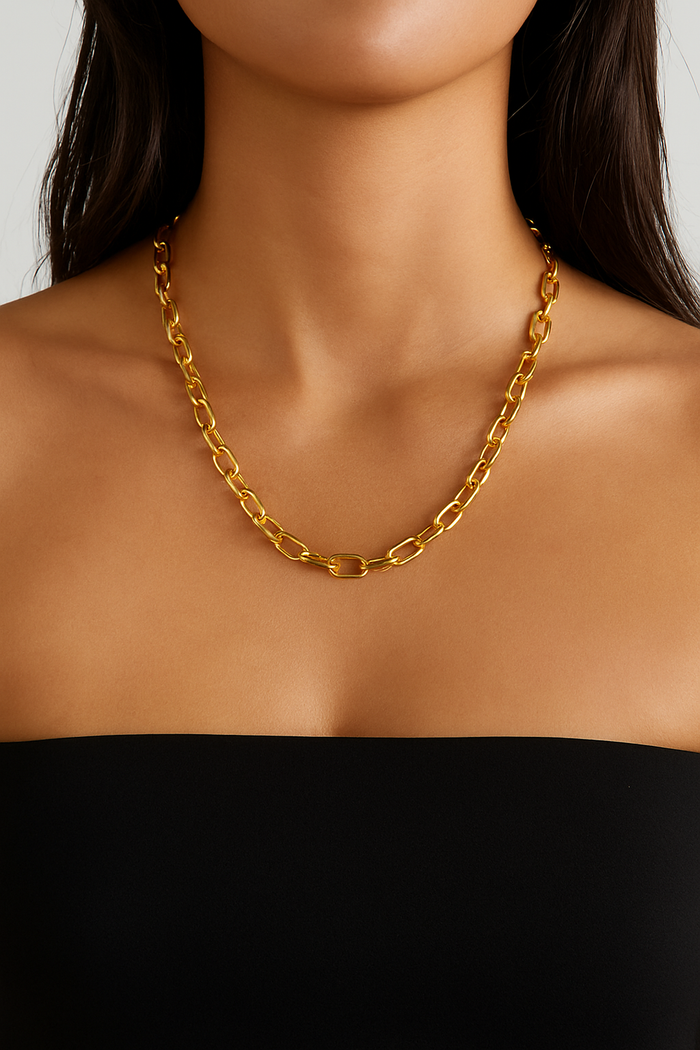
Before choosing symbols, stones or colours, choose a base that is comfortable, compatible and strong enough for the charms you want to wear. Open-link and paperclip bracelets make this especially simple because the links themselves become attachment points.
With interchangeable charms, the bracelet does not have to stay the same. You can wear one charm today, move it to another link tomorrow, switch metals, or transfer the same charm to a compatible necklace or anklet.
1. Choose the right bracelet base
The best charm bracelet base is one you would be happy to wear even without charms. A paperclip or open-link bracelet creates obvious places to hook charms on and makes it easy to change their position. A finer chain gives a more delicate result but may not suit larger charms. A rigid bangle behaves differently again because the charms move around a fixed circular shape.
Not every charm fits every bracelet. Always check the opening of the hook or clasp against the link size before combining pieces. On Galleria Armadoro’s modular system, selected Cara and Large Link bracelets and anklets are designed to work with compatible hook charms. The simplest route is to start from Build Your Own Charm Jewellery, where the compatible bases and charms live together.
2. How should a charm bracelet fit?
A charm bracelet should have enough ease to move around the wrist without feeling loose enough to slide over the hand. Charms add volume as well as weight, so a bracelet that feels perfectly fitted when empty can feel tighter once several charms are attached.
Instead of choosing a size only from appearance, think about how many charms you plan to wear and whether you prefer a close or looser wrist fit. If a bracelet doubles as an anklet, check the individual product measurements rather than assuming one standard length will suit both.
01 / MINIMAL
One charm
Use one charm as the focal point and let the bracelet link structure remain visible. This is the cleanest way to start.
02 / BALANCED
Two or three
An easy everyday formula. Vary shape or scale slightly, and leave enough empty links for the bracelet to keep moving naturally.
03 / COLLECTED
Four or more
More personality, more movement. Repeat one element — metal, stone family or shape language — so the wrist still feels coherent.


3. How many charms should you put on a bracelet?
There is no universal correct number. One charm feels graphic. Two or three feel styled. A fuller bracelet becomes a collection in its own right. The practical limit is determined by the bracelet size, link spacing, charm size, weight and comfort — not by a styling rule.
If you are starting from zero, begin with one to three charms. That gives you enough information to judge balance without filling the bracelet immediately. You can always add more later.
4. How should charms be spaced around a bracelet?
You do not need to place one charm on every available link. In fact, leaving some links empty often makes the bracelet look more deliberate and gives the charms room to move.
For two charms, place them slightly apart rather than side by side. With three, use one central visual anchor and place the others around it. On fuller bracelets, distribute the weight around the wrist instead of loading every charm into one small section.
Perfect symmetry is optional. A little asymmetry often looks more modern because the bracelet feels collected rather than pre-arranged.

5. Can you add charms to a bracelet without tools?
Yes — if the charm is designed with a removable hook or clasp. Traditional jump-ring charms usually need pliers or a jeweller to attach them securely. Interchangeable hook charms are different: open the hook, attach it through a compatible link and close it again.
This is why removable charms are useful for modular jewellery. The same piece can move between bases rather than being permanently attached to one bracelet.
MIXED METALS
Can you mix gold and silver charms on one bracelet?
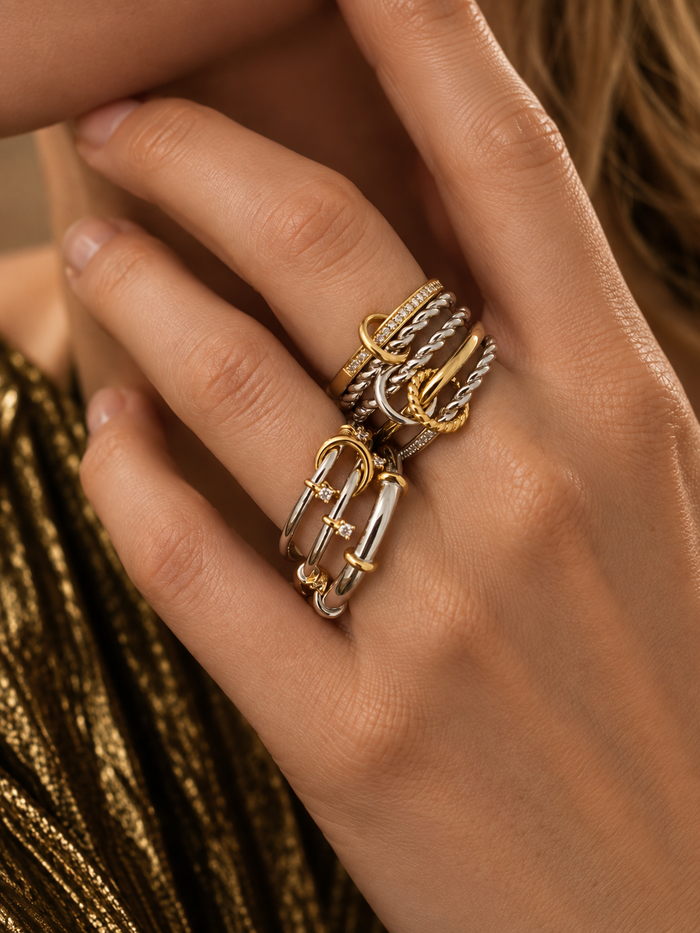
Yes. Gold and silver do not need to be separated. The easiest way to make mixed metals look intentional is to repeat each finish at least once or use a two-tone element that visually connects them.
A gold bracelet with one silver charm can look accidental; a gold bracelet with a silver charm plus silver elsewhere in the wrist stack looks deliberate. White rhodium and black rhodium can work the same way as additional finishes.
READ THE MIXED-METAL GUIDETHE EASY RULE
Repeat one thing.
If the charms vary in metal, repeat a colour. If they vary in colour, repeat a shape. If they vary in shape, repeat the metal. You only need one visual thread to stop a mixed charm bracelet from feeling random.
SHOP JEWELLERY CHARMS6. Charm bracelet or charm bangle: what is the difference?
A chain charm bracelet is flexible and follows the wrist, while a charm bangle has a more structured circular shape. Charms on a chain can be positioned on individual links; charms on a bangle often slide or move around the circumference unless the system includes stoppers.
If your priority is being able to move charms between specific positions, an open-link chain gives you more control. If you prefer a cleaner, more architectural wrist shape, a bangle may suit you better.
7. How do you stack a charm bracelet with other bracelets?
Let the charm bracelet be the moving layer and keep at least one neighbouring bracelet simpler. A smooth bangle, fine chain or watch can act as the visual pause between more decorative pieces.
Varying width is usually more effective than stacking several bracelets with the same scale. One wider piece, one charm chain and one finer bracelet create contrast without making the wrist feel heavy.
Can you wear a charm bracelet with a watch?
Yes. Treat the watch as the most structured piece in the stack and let the charm bracelet provide the movement. Wearing the charm bracelet beside the watch can work especially well when the bracelet chain is lighter than the watch case and the charms are not so large that they constantly knock against it.
For a cleaner wrist, keep the watch between a simple bangle or fine chain and the charm bracelet. For a more collected look, let two charm bracelets sit on one side of the watch, but vary their widths so the stack does not become one solid block of metal.


MODULAR JEWELLERY
The bracelet is only one place the charm can live.
With interchangeable charms, the same piece can move from a bracelet to a necklace, anklet or compatible cord. That means the jewellery changes without requiring a new charm collection for every base.
READ THE MULTIPLE-CHARM NECKLACE GUIDE8. Can necklace charms be worn on a bracelet?
Yes — when the hook fits securely through the bracelet link. The distinction between a “necklace charm” and a “bracelet charm” matters less in a modular system because the attachment can move between compatible bases.
Always check the charm dimensions, hook opening and weight. A large pendant that looks balanced on a 50 cm necklace may feel oversized at the wrist even if it technically fits.
9. How do you stop a charm bracelet feeling crowded?
Leave negative space. Empty links are part of the design. If the charms constantly knock into each other, twist around the bracelet or make the wrist feel noticeably heavier, remove one or move the group farther apart.
A good charm bracelet should still behave like jewellery rather than a keyring: the movement should feel deliberate and comfortable.
10. How to build your own charm bracelet in three steps
- Choose the base. Start with a bracelet or bracelet/anklet chain whose links work with your charms.
- Add one to three charms. Choose a focal piece first, then add contrast through shape, colour or metal.
- Keep changing it. Move charms to new links, remove them, add another finish or transfer the same charm to a necklace or anklet.
Explore Build Your Own Charm Jewellery, browse all jewellery charms, or see the combinations styled in THE LOOKS.
CHARM BRACELET FAQ
The questions people ask before they start.
How many charms should you start with on a bracelet?
One to three charms is an easy starting point because it lets you judge spacing, weight and balance before adding more. There is no fixed final number.
What type of bracelet is best for charms?
Open-link and paperclip chain bracelets are practical for removable hook charms because individual links provide clear attachment points. Other charm systems may use snake chains, bangles or fixed jump rings.
Can you mix gold and silver on a charm bracelet?
Yes. Repeating each metal or adding a two-tone element helps the combination feel intentional. Mixed-metal charm bracelets can include gold, silver, white rhodium and black rhodium.
How tight should a charm bracelet be?
It should sit securely on the wrist while leaving enough room for the charms to move comfortably. Because charms add volume and weight, avoid choosing a fit that already feels restrictive when the bracelet is empty.
Can you add charms to a bracelet without tools?
Yes, when the charm has an interchangeable hook or clasp. Traditional jump-ring charms usually require tools, while removable hook charms can be opened and moved by hand.
Can the same charm go on a bracelet and a necklace?
Yes, if both bases are compatible with the charm hook. A modular charm can move between selected bracelets, necklaces, anklets and cords instead of remaining permanently attached.
How do you space charms on a bracelet?
Leave some links empty and distribute heavier charms around the wrist. Two charms can sit slightly apart; with three, use one as the visual anchor and place the others around it.
What is the difference between a charm bracelet and a charm bangle?
A charm bracelet uses a flexible chain, while a charm bangle has a rigid or semi-rigid circular structure. The two formats also differ in how charms move and where they can be positioned.
HOOK. UNHOOK. REPEAT.
Start with the wrist. Keep the charm moving.
Choose the bracelet, add one charm, then change the composition whenever you want. The best charm bracelet is not the one with the most charms — it is the one you can keep making your own.
BUILD YOUR OWN CHARM JEWELLERY

