



THE MATERIALS EDIT
Platinum-plated jewellery vs 925 sterling silver
The shine is only the beginning. A closer look at the metal beneath it, the care it needs and the pieces you will want to wear on repeat.
EXPLORE THE LOOKS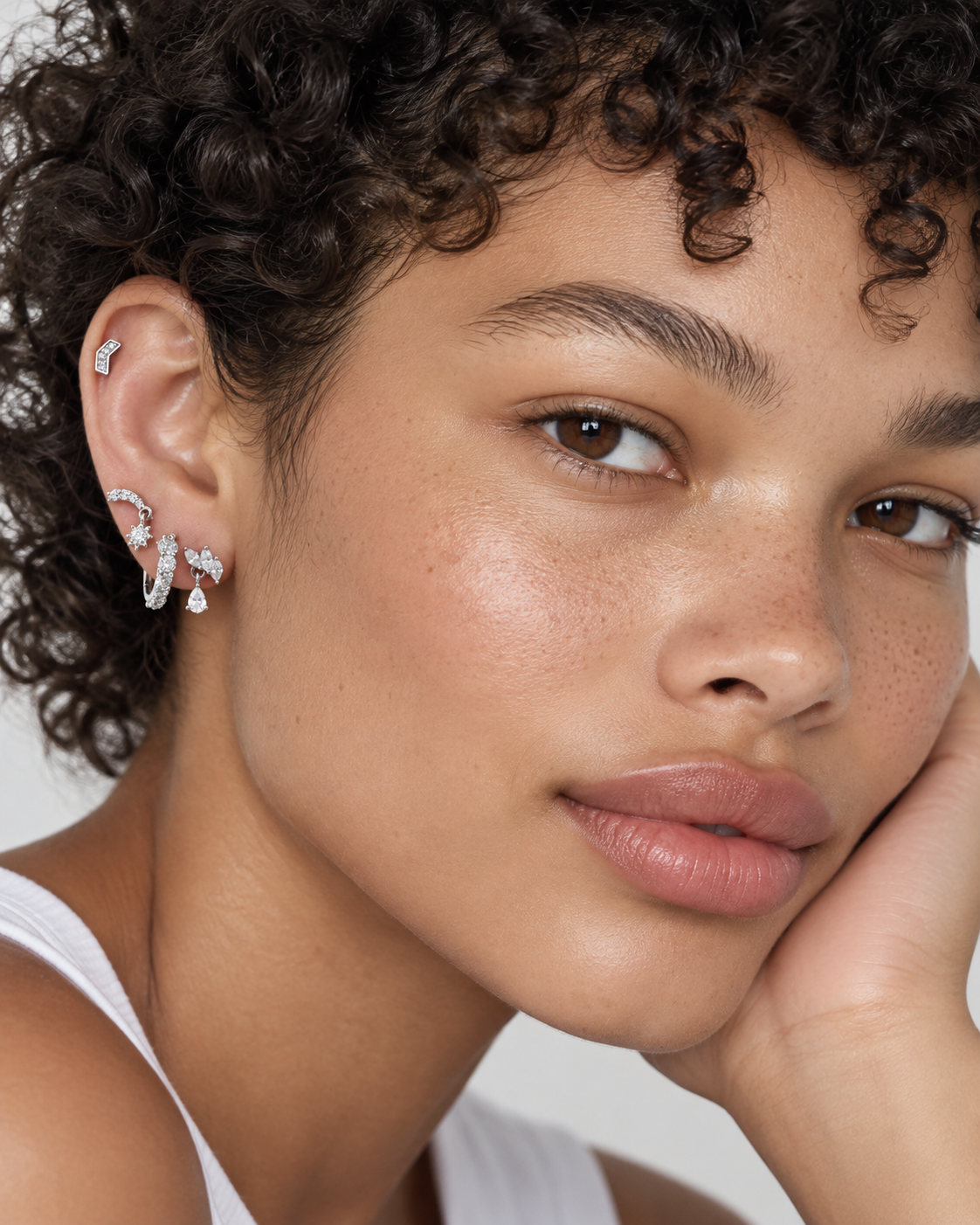
Shop the styling · Materials vary by individual piece.
A sculptural silver hoop. A cool chain against a white shirt. A ring that makes the rest of the outfit feel finished. White-metal jewellery may share a colour, but it does not always share a construction.
Before choosing between platinum-plated jewellery and sterling silver, look beyond the finish. The most useful details are what the piece is made from, what touches your skin and how it can be cared for over time.
THE QUICK ANSWER
Platinum-plated jewellery has a platinum-containing surface layer over another metal. 925 sterling silver is an alloy containing 92.5% silver. The first term describes a finish; the second describes the underlying material. Platinum plating can cover sterling silver or a different alloy, so a piece can be both platinum-plated and sterling silver. Ask what is underneath.
1, 2Same colour. Different details.
| What to compare | Platinum plating over a non-precious core | Unplated 925 sterling silver | Rhodium-plated 925 sterling silver |
|---|---|---|---|
| Underlying material | Check the named alloy; the plating label does not identify it. | 92.5% silver alloy. | 92.5% silver alloy beneath a rhodium finish. |
| Precious-metal content | In the coating; quantity depends on the specification. | Silver throughout the alloy. | Silver in the alloy, plus rhodium at the surface. |
| Surface ageing | Platinum resists tarnishing; a coating can still show wear. | Can tarnish and scratch. | Rhodium helps protect the silver; the finish can wear. |
| Cleaning | Use the maker’s method for that coating. | Use care suitable for the finish, stones and construction. | Treat as plated jewellery; avoid abrasive silver polish. |
| Repair & renewal | Depends on the core, coating process, design and service. | Ask a jeweller to assess the specific repair. | Assessment may include restoring the rhodium finish. |
| Skin suitability | Check the complete piece and testing. | Check alloying metals and all skin-contact parts. | Check both the silver alloy and the coating system. |
This comparison separates a non-precious core from a sterling-silver core. Platinum-plated sterling silver belongs to both descriptions; it is not covered by the first column alone. Material information: sources 1–5.
What metal is underneath platinum plating?
There is no universal core metal. A platinum finish can be applied to a precious-metal article or another suitable metal. Look for a complete description such as “platinum-plated sterling silver” or “platinum plating over stainless steel”. “Platinum-plated” alone leaves that question open.1, 6
For earrings, read the body, post and fastening separately. A sterling-silver post does not make the entire hoop sterling silver. Equally, a rhodium finish does not stop a genuine 925-silver body from being sterling silver.
Does platinum-plated jewellery contain real platinum?
Yes, genuine platinum plating contains platinum in its coating. It is different from a solid platinum alloy. The label alone does not reveal the coating’s mass, thickness or purity. A recognised platinum fineness, such as 950, describes a different specification from a plated surface.1, 7
What does 925 sterling silver mean?
925 means 925 parts silver per 1,000 parts of the alloy. The remaining metals help give the material practical working properties. It does not tell you whether a piece is hollow, how much it weighs or whether it has an additional finish. Those are separate details.2, 4
THE LOOKS / START WITH THE METAL
A silver foundation, styled your way.
Bring the material lesson into your jewellery wardrobe. The pieces highlighted below have a specified sterling-silver base; open each Look to explore the styling and choose your own combination.
THE LOOKS / EAR STORIES
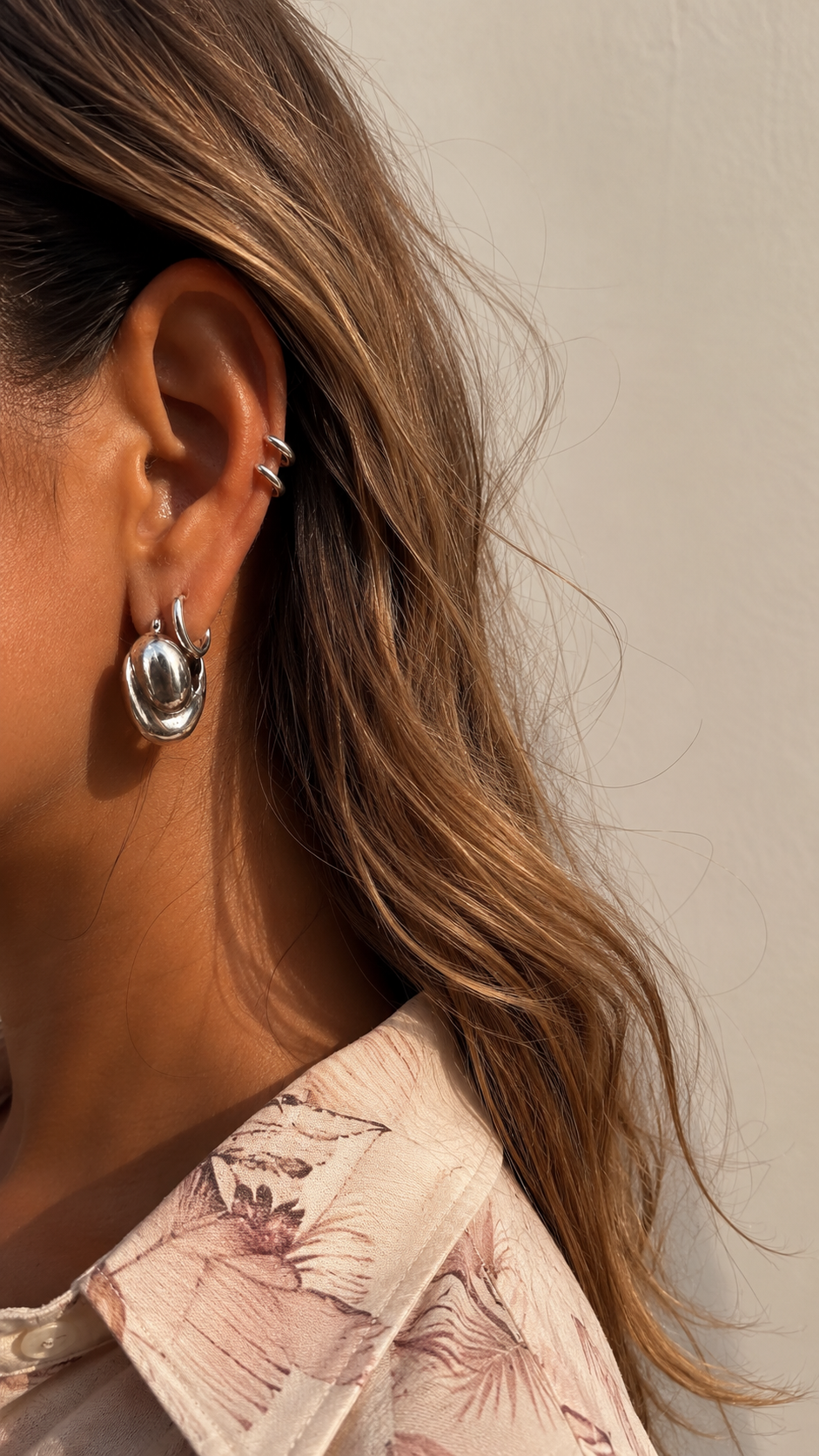
The Sculptural Silver Ear Story
Give the largest hoop room to lead, then build upwards with quieter proportions. Gemma and the highlighted huggies are 925 sterling silver with white rhodium plating.
- Gemma 2 cm hoops925 sterling silver · white rhodium · pair
- 6.5 mm silver huggie925 sterling silver · white rhodium · single
- 11 mm silver huggie925 sterling silver · white rhodium · single
THE LOOKS / EAR STORIES
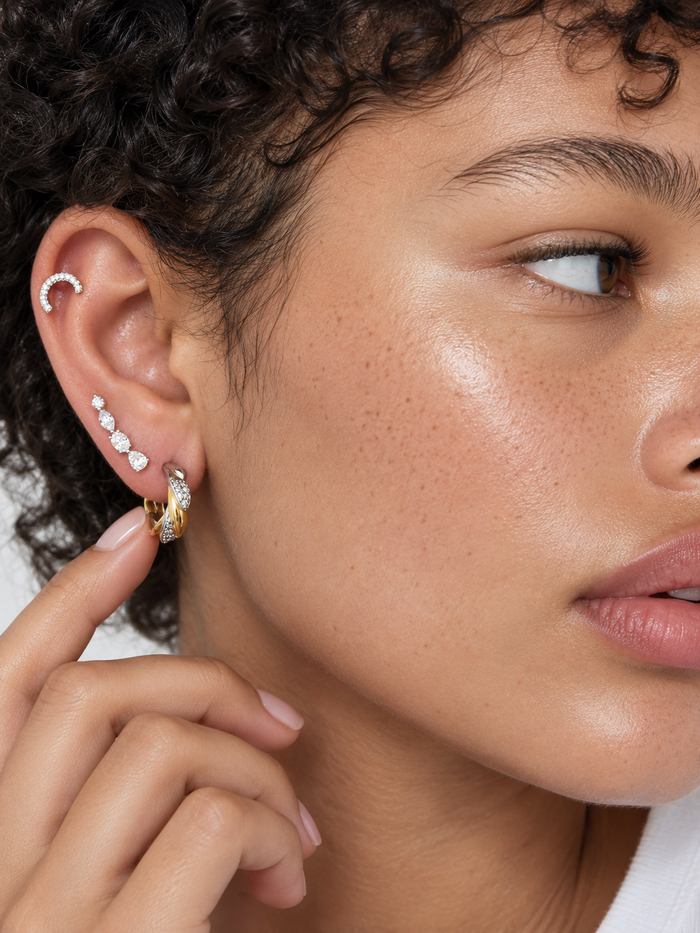
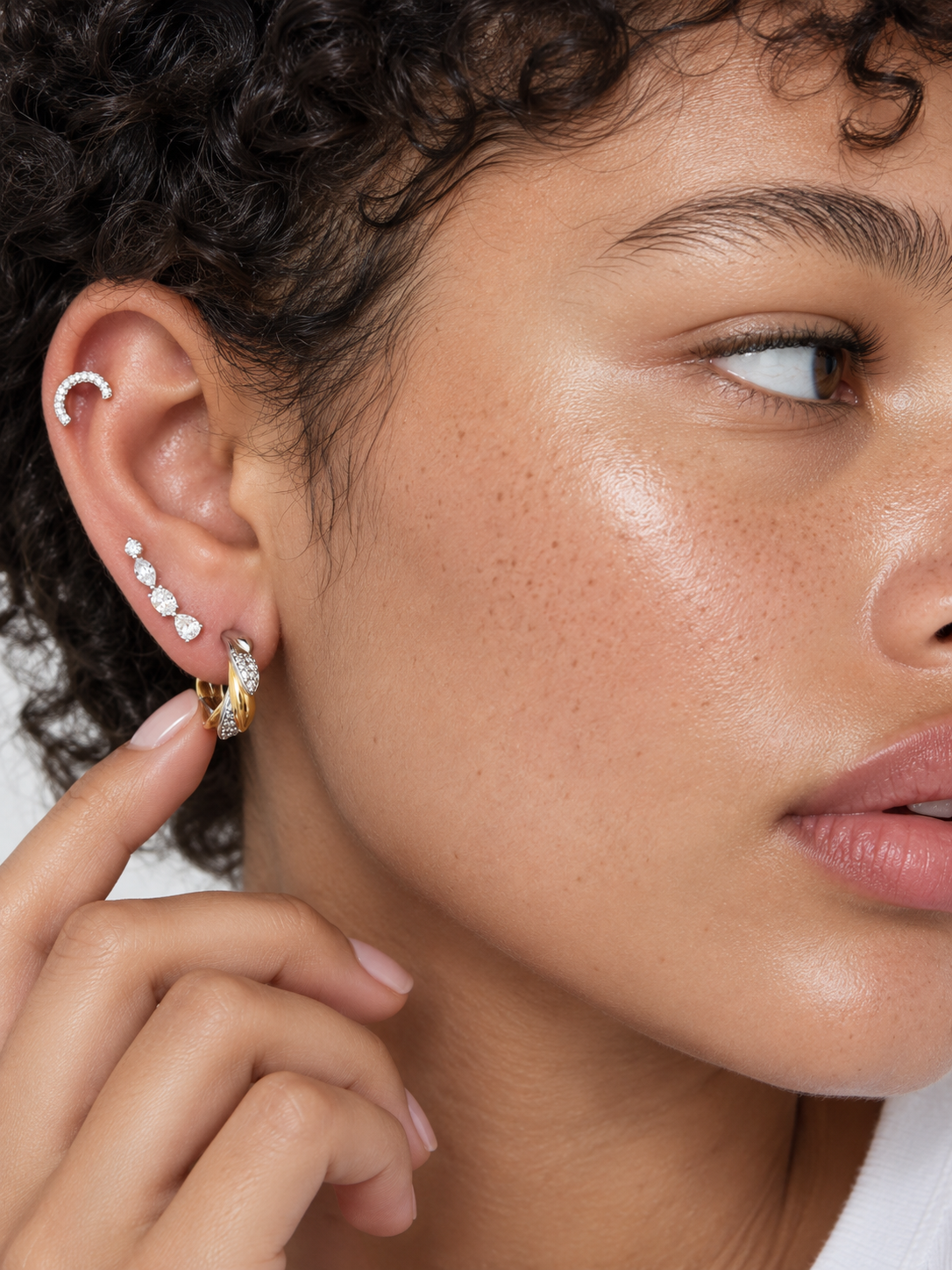
Curve Appeal
A two-tone finish can sit over a sterling-silver base. Elara makes the point elegantly, mixing warm gold and cool rhodium in one small huggie.
- Elara Two-Tone Huggie925 sterling silver · 24ct gold and white rhodium plating · single
- Half Circle silver stud925 sterling silver · white rhodium · single
Does platinum-plated jewellery tarnish?
Platinum is highly resistant to tarnishing, but that does not make every platinum-plated piece permanently unchanged. The appearance of a finished piece also depends on its coating, underlying metal, construction and treatment. A tarnish-resistant surface can still collect residue or show scratches and wear.5, 7
Sterling silver can darken when it reacts with sulphur-containing substances. That surface change is different from a plated layer wearing away. Tarnish can often be removed from suitable unplated silver; polishing cannot put a missing coating back.3
Is rhodium plating the same as platinum plating?
No. Rhodium and platinum are different metals. Both can be used in bright decorative finishes. Rhodium plating is often used on sterling silver to help resist tarnishing. Neither finish name, by itself, tells you the core metal or proves that one finished piece will outlast another.4, 5, 8
How long does platinum plating last?
There is no reliable lifespan that applies to every piece. Ask about the coating specification, wear testing and renewal service. A promise of a fixed number of years needs evidence for that particular product. How you wear and care for it also matters.
The most useful luxury?
Knowing exactly what you are wearing.
Is platinum-plated jewellery hypoallergenic?
It can be suitable for sensitive skin, but the finish name alone is not a guarantee. Consider the complete piece: core alloy, any layers beneath the finish, posts, backs and clasps. Nickel is a common cause of contact allergy; a familiar precious-metal name does not answer every allergy question.9
Before buying, ask which metals touch the skin, whether the finished item has been tested for relevant nickel-release requirements, and what the maker’s hypoallergenic claim covers. EU restrictions address nickel release from relevant skin-contact articles, including coated articles; that is different from a promise that nobody can react.10
If you already know your trigger, check specifically for it. A dermatologist can help investigate recurring reactions. For a fresh or healing piercing, ask a qualified piercer about the appropriate initial jewellery; this guide concerns jewellery shopping, not healing-piercing advice.
Read our hypoallergenic jewellery guide for more on materials and skin-contact components.
THE LOOKS / THE HOOP WARDROBE
Choose the silhouette. Read the specification.
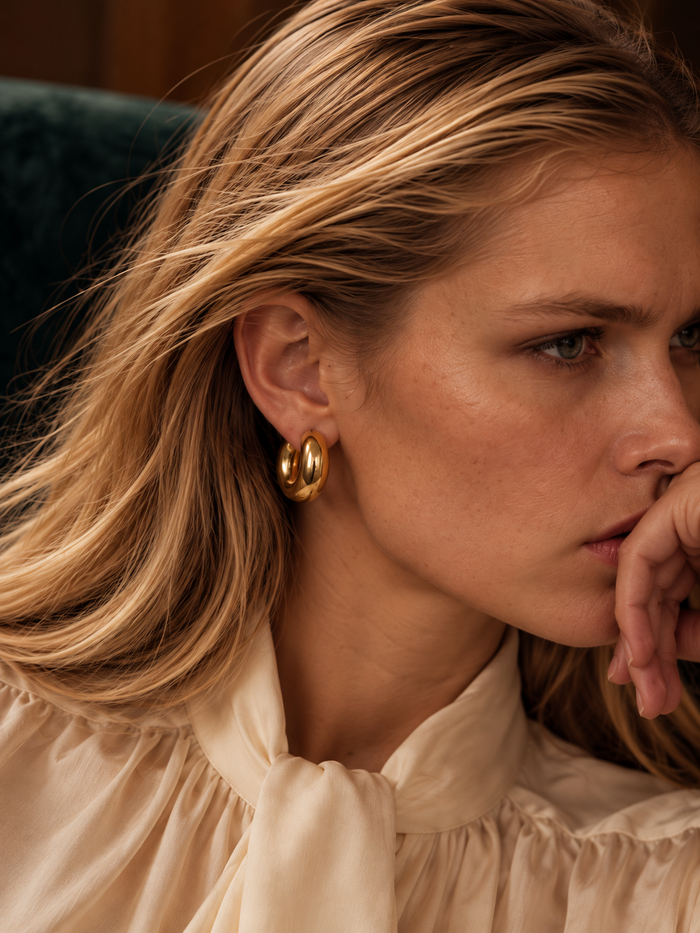
A considered jewellery wardrobe can include different constructions. These two Looks pair a brass-based statement hoop with smaller sterling-silver studs.
THE LOOKS / EAR STORIES
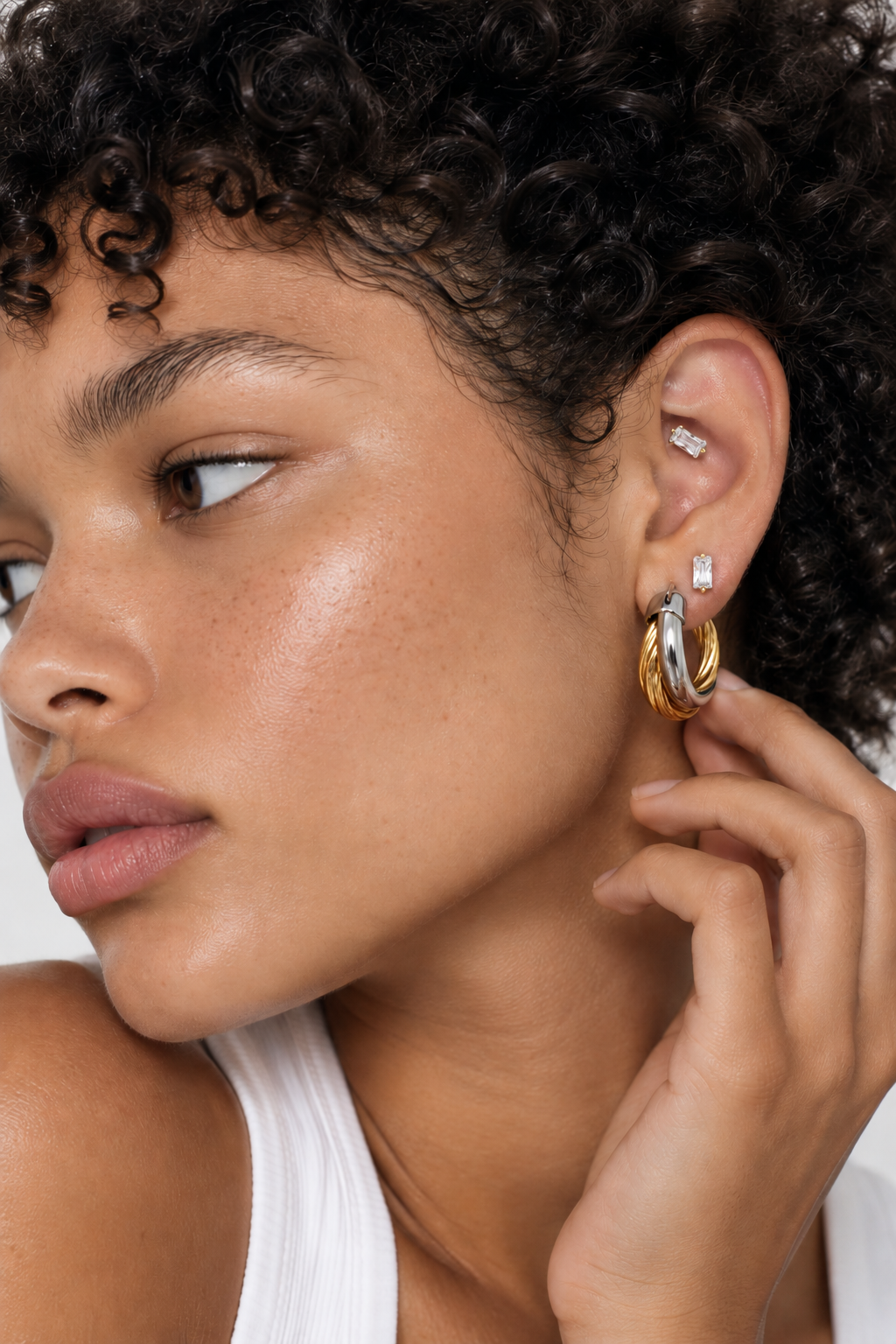
Double Take
Double Take balances one generous curve with tiny points of light. Allegra’s body is brass; its post is sterling silver. The studs are separate sterling-silver pieces.
- Allegra 2 cm Two-Tone HoopsBrass body · 925 sterling-silver posts · gold and white rhodium finishes · pair
- Mini Baguette silver stud925 sterling silver · white rhodium · single
- Mini Baguette gold stud925 sterling silver · 24ct gold plating · single
THE LOOKS / EAR STORIES
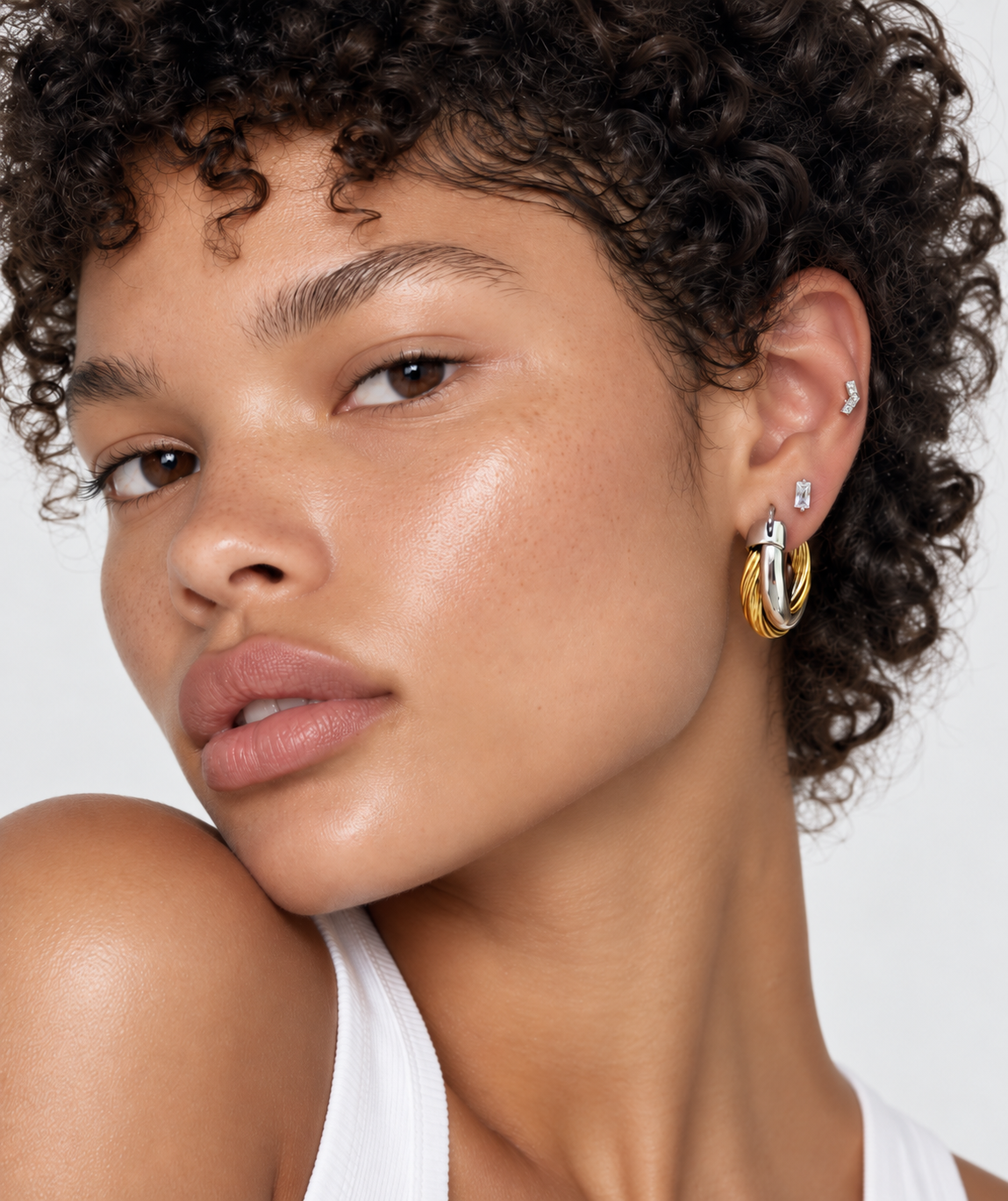
The Two-Tone Shortcut
Repeat the same hoop with a sharper upper-ear accent. Reusing a favourite piece across several Looks is one practical way to get more from the jewellery you own.
- Allegra 2 cm Two-Tone HoopsBrass body · 925 sterling-silver posts · pair
- Chevron silver stud925 sterling silver · white rhodium · single
Ear placements shown are styling references. Fit depends on anatomy, piercing position and jewellery dimensions. Check the individual product and your piercer’s guidance where appropriate.
Can it be polished, repaired or replated?
Those are three different jobs, and the answer depends on the exact piece. Cleaning removes residue. Polishing can remove surface material. Repair addresses damage or a failed component; replating applies a new finish.
Unplated silver
Appropriate tarnish removal may restore its brightness, but it also removes a little silver. Stones, hollow construction and decorative finishes can change which methods are suitable.3
Plated jewellery
Abrasive polishing can thin a coating. Use the maker’s care method and ask whether the workshop can restore the original finish. Do not assume a generic silver-polishing cloth is suitable.11
For either construction, ask whether a clasp can be replaced, a joint repaired or the surface renewed, and request an assessment and price. The existence of a plating process is not proof that every retailer offers replating, or that every design can be restored.
Can you shower or swim in platinum-plated jewellery?
Only rely on a water-resistance claim that applies to the exact item. A coating label does not cover every clasp, stone, adhesive or decorative element. Some manufacturers test selected products for water exposure; that evidence should not be extended to all jewellery with a similar finish.12
For the GA pieces featured here, follow their individual care instructions and remove them before swimming or showering. Avoid direct contact with perfume and harsh cleaning products.
THE LOOKS / NECKLACE LAYERS
Layer the textures. Know the metals.
A cool-toned necklace story can combine sterling silver and plated brass. The appearance is coordinated; the underlying materials are clearly different.
THE LOOKS / NECKLACES
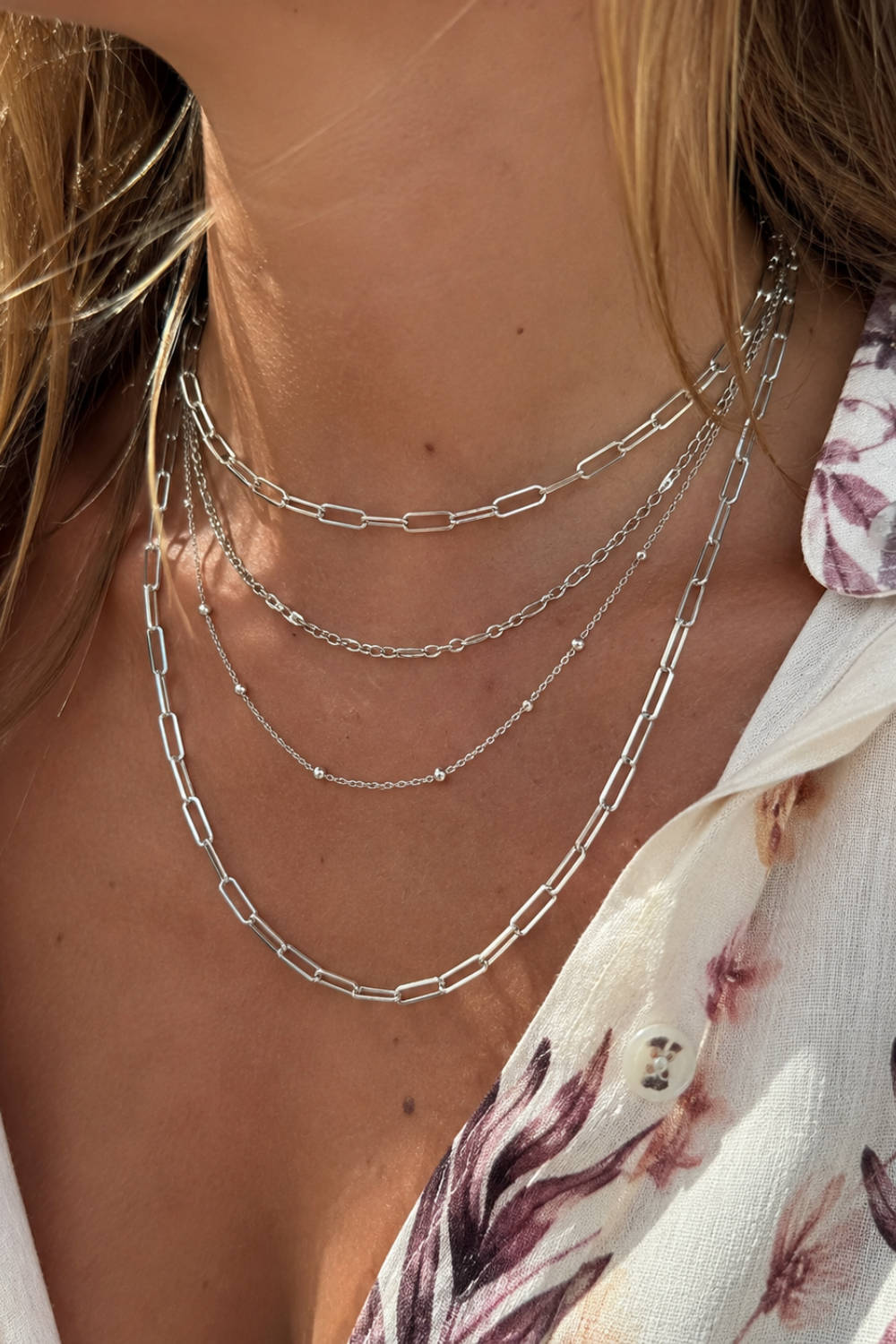
The Silver Link Layers
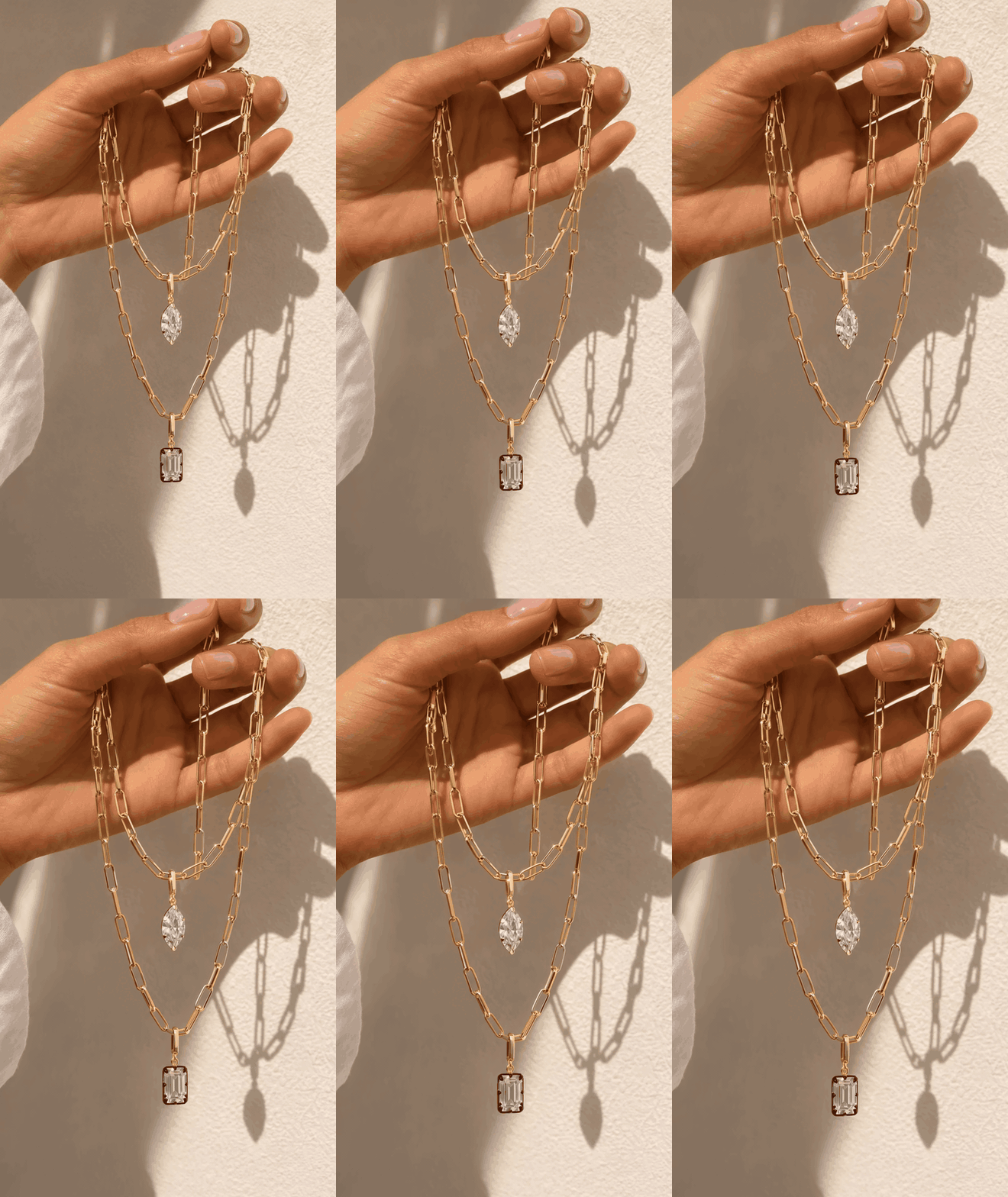
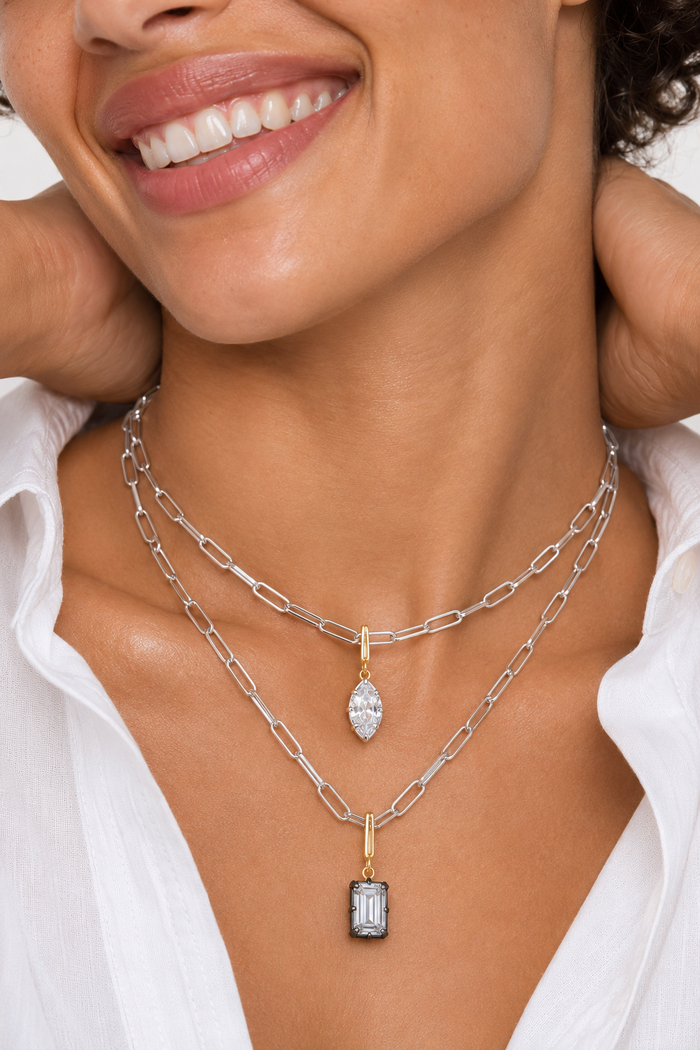
Build a fine silver foundation, then add a larger link for contrast. Charlotte and Catalina are sterling silver; the Large Link chain is white-rhodium-plated brass.
- Charlotte chain925 sterling silver · white rhodium
- Catalina chain925 sterling silver · white rhodium
- Large Link Paperclip chainBrass · white rhodium
THE LOOKS / NECKLACES
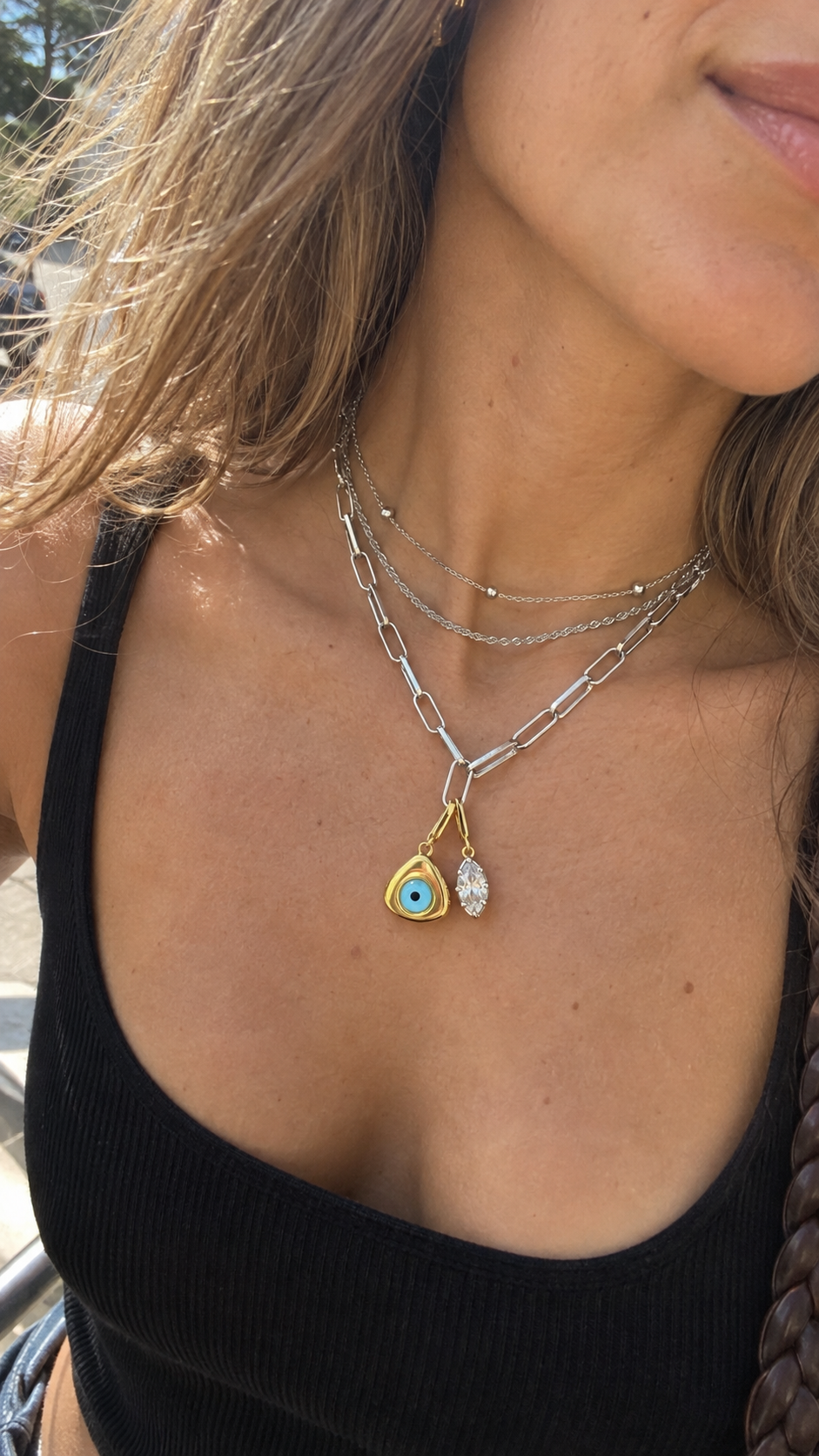
Cool silver necklace layers
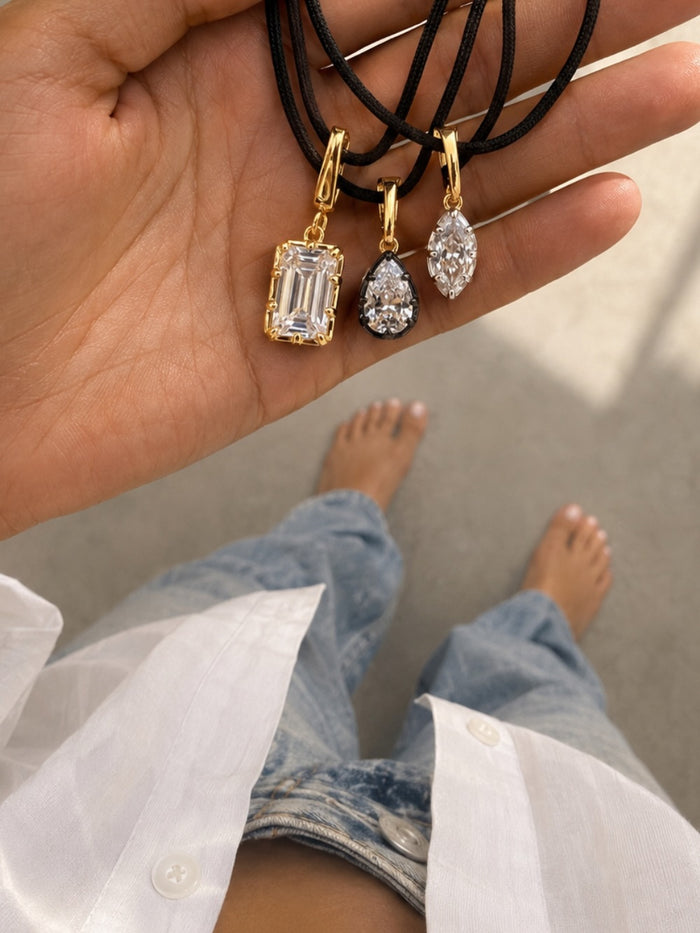
Keep the chains cool and let one gold-toned charm change the mood. Choose a chain first, then add a compatible charm from the Look.
- Twisted silver chain925 sterling silver · white rhodium
- Charlotte chain925 sterling silver · white rhodium
- Triangle Evil Eye Hook CharmBrass · 24ct gold plating
Which offers better long-term value?
Neither description wins automatically. Sterling silver gives you a specified precious-metal alloy beneath any finish. A well-made plated piece may suit your preferred shape, budget and care routine. Assess the complete design and the support behind it.
Precious-metal content and value to the wearer are different questions. Plating contains a limited quantity of precious metal; “925” specifies the silver proportion of the alloy, not the total weight of the piece. Neither label promises a resale price.
- Material clarity: can you identify the body, finish and skin-contact parts?
- Wearability: are the size, weight and fastening right for you?
- Maintenance: does the care routine fit your daily life?
- Aftercare: are repair and replating options explained, with costs?
- Repeat wear: can you style the piece with several things you already own?
Our recommendation: buy a piece you want to reach for, with materials you understand and a realistic route to looking after it.
THE LOOKS / THE RING EDIT
Silver underneath. Your choice of finish.
THE LOOKS / RINGS
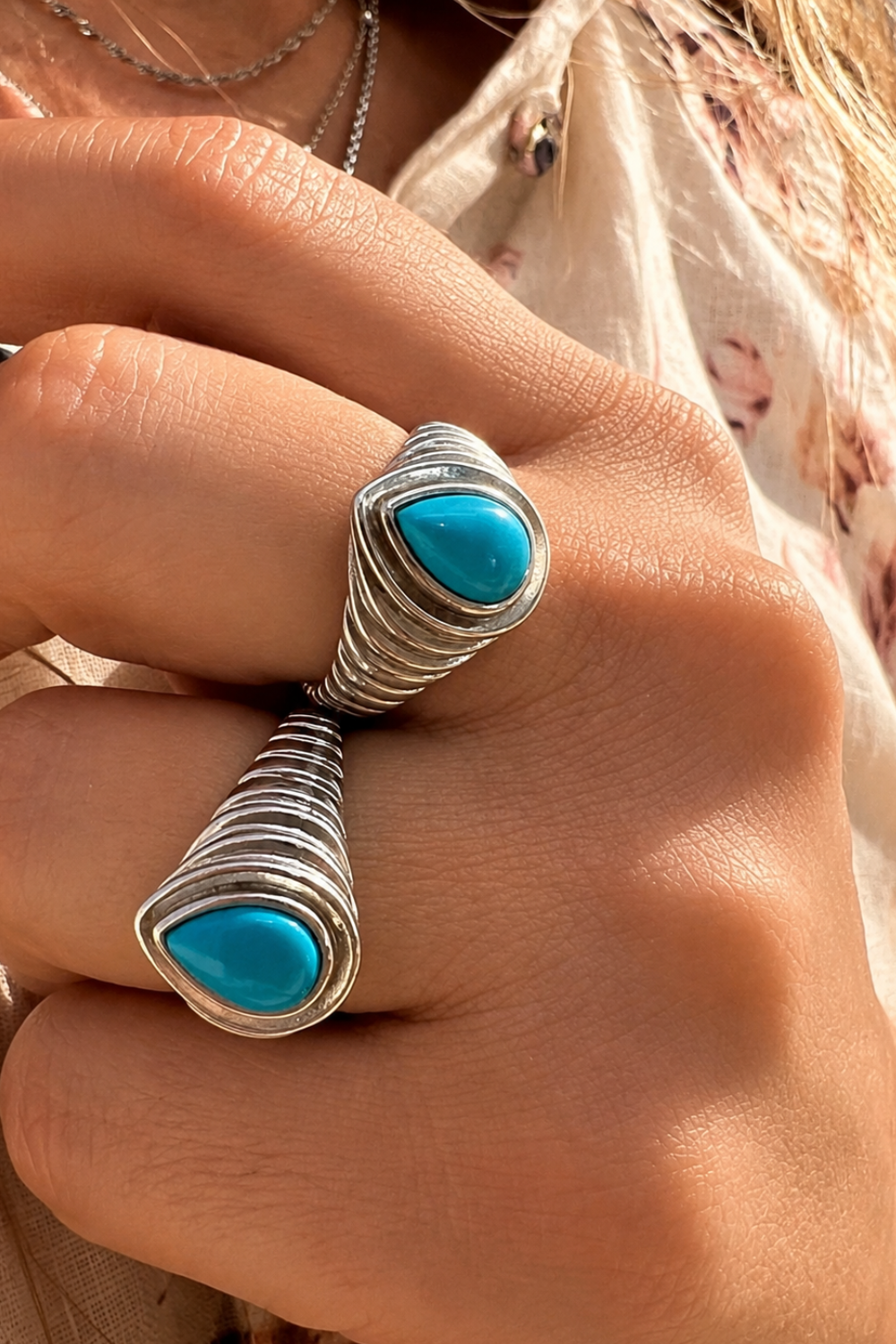
The Turquoise Ring Stack
Cool metal and a generous flash of turquoise. Start with the Ridge Teardrop, then let the styling guide your next addition.
- Ridge Teardrop Turquoise Silver Ring925 sterling silver · white rhodium · choose your size

THE LOOKS / RINGS
The Kyma & Bohème Signet Ring Story
A golden finish can also have a sterling-silver foundation. Mix Kyma’s wave-like shapes with the clean face of a Bohème signet.
- Kyma Supersonic ring925 sterling silver · 24ct gold plating
- Kyma Vector ring925 sterling silver · 24ct gold plating
- Bohème signet ring925 sterling silver · 24ct gold plating
Open each Look to select the currently available pieces and options. The photographs are styling inspiration; product availability and exact combinations can change. For sizing, use our ring size calculator.
GALLERIA ARMADORO / CARE & RESTORE
A little aftercare goes a long way.
Our current policy provides a two-year warranty for eligible online purchases, with complimentary eligible repairs. Gold vermeil pieces purchased through our e-commerce store are eligible for complimentary replating within two years. You cover shipping to us once; every item is assessed individually.
Repairs and replating remain available after that period, with service fees. Check the current terms and suitability of your piece before sending it.
EXPLORE WARRANTY & REPAIRS13Platinum plating, answered.
Is platinum-plated jewellery the same as solid platinum?
No. A plated piece has a platinum-containing surface over another metal. A solid platinum alloy is specified by its platinum fineness; plating does not give the underlying metal that composition.
Is platinum-plated sterling silver real silver?
Yes, if the underlying material is accurately described as 925 sterling silver. A finish changes the surface; it does not replace the silver alloy beneath it.
Does 925 mean silver-plated?
No. 925 describes sterling-silver fineness. Silver-plated jewellery has a silver coating over another material; the terms are not interchangeable.
Does platinum-plated jewellery contain nickel?
The name does not tell you. Ask about the core, intermediate layers and skin-contact parts, plus testing relevant to the finished item. Do not assume that all platinum-plated jewellery has the same composition.
Can platinum-plated jewellery turn your skin green?
It cannot be predicted from the finish name alone. If a coating wears and exposes a copper-containing alloy, staining may occur. Green staining alone is not proof of an allergy; itching or a persistent rash needs separate attention.16
Can platinum plating be replated?
Sometimes, but availability depends on the coating system, core, stones and workshop. Ask the original maker about restoration before buying or arranging independent work.
Is platinum-plated jewellery better than rhodium-plated silver?
There is no universal winner. Compare the underlying alloy, coating specification, construction, care and service. Rhodium-plated 925 silver has a sterling-silver core; a platinum-plated piece may or may not.
Should I choose a plated piece or sterling silver as a gift?
Start with the recipient’s style, any known metal sensitivity and their care habits. Then compare the exact materials, fit, returns and aftercare. A clear specification is more useful than choosing on colour alone.
Why platinum plating is in the conversation
In its 4 November 2026 announcement, Pandora said its Netherlands pilot had expanded to markets including the UK, US and Australia, with a transition due to start in 2027. Its earlier announcement connected the move with reducing reliance on silver.14, 15
For shoppers, the useful question remains the same: what is the exact piece made from? A new finish deserves a clear explanation, alongside its design and care requirements.
Sources & further reading
Primary materials, care and company sources checked on 12 November 2026. The shopping specifications above link directly to the relevant GA product pages. Manufacturer performance claims are attributed to the manufacturer; this article does not report independent comparative testing.
- Sheffield Assay Office — plating construction and precious-metal substrates
- UK Government — hallmarking guidance and silver fineness
- Canadian Conservation Institute — silver tarnish and material loss during cleaning
- GIA — sterling silver, rhodium finishes and material considerations
- Umicore — platinum-rhodium coating properties; an example showing that formulations differ
- Pandora UK — a specific platinum-plated necklace described with a stainless-steel core
- Platinum Guild International — platinum fineness and tarnish resistance
- Umicore — rhodium as a decorative coating
- American Academy of Dermatology — nickel allergy and jewellery
- European Commission — REACH restrictions, including nickel
- Canadian Conservation Institute — polishing and plated surfaces
- Pandora UK — product-specific testing and plated-jewellery care
- Galleria Armadoro — current warranty, repairs and replating terms
- Pandora — Q3 announcement, 4 November 2026
- Pandora — initial platinum-plating announcement, 4 February 2026
- Nebraska Medicine — dermatologist explanation of green jewellery marks
Related GA guides: What is gold vermeil? · Hypoallergenic jewellery explained


