





THE CHARM GUIDE
How to Wear Multiple Charms on a Necklace
One charm is a focal point. Two create contrast. Three or more turn the necklace into a collection. Here is how to make multiple charms feel intentional — and how to change them whenever you want.
BUILD YOUR OWN CHARM JEWELLERYSTART HERE
Multiple charms work best when the base does some of the work.
To wear multiple charms on one necklace, begin with a chain or cord that is compatible with the charm attachment. Then build the composition by changing scale, spacing and finish rather than making every charm identical.
An open-link or paperclip chain gives you several places to attach charms. A cord naturally pulls the charms into a central cluster. With interchangeable charms, the combination is not permanent: remove one, move it to another link, add a second metal, or transfer the same charm to a compatible bracelet or anklet.
How many charms should you wear on one necklace?
There is no fixed number. The useful question is how much visual weight the necklace can carry without losing movement or comfort. For most everyday charm necklaces, one to three charms is the easiest starting point. Larger groups work best on a base with enough space between attachment points.
01 / ONE
One charm
Clean and graphic. Use a single charm when the stone, symbol or shape is strong enough to be the focal point.
02 / TWO
Two charms
The easiest way to add contrast. Pair different cuts, sizes or metals rather than two pieces that compete at the same scale.
03 / THREE+
Three or more
More collected, less matched. Keep one repeated element — a metal, stone family, shape language or proportion — so the group still feels connected.


Choose the necklace base before you choose the charms.
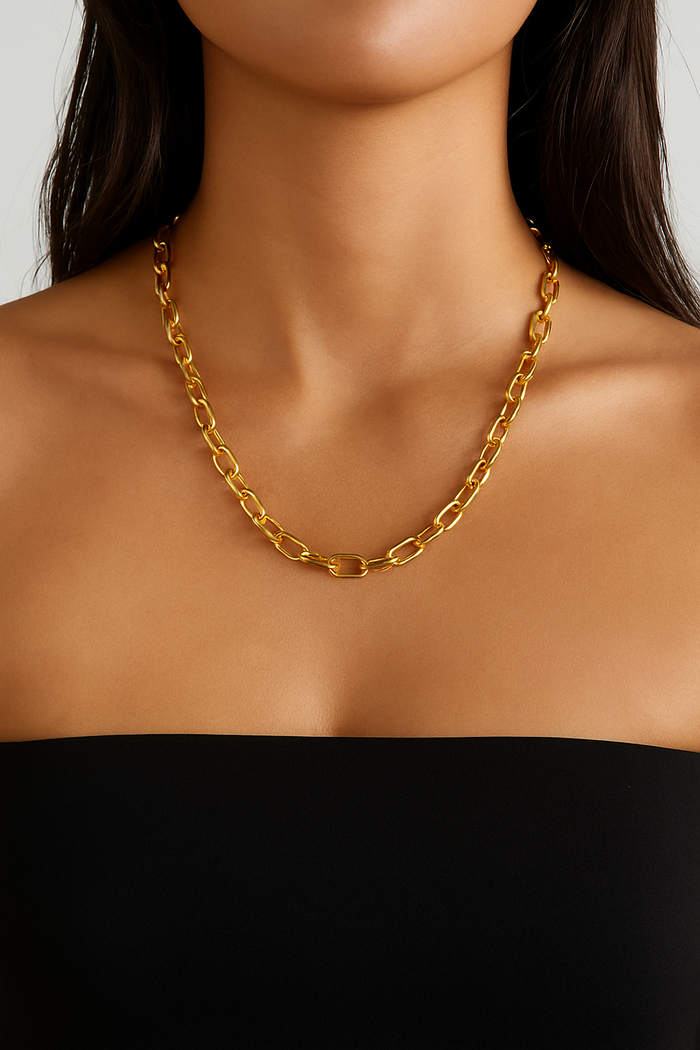
A charm necklace starts with compatibility. Paperclip and open-link chains are especially useful for removable hook charms because the larger links create clear attachment points. A cord gives a softer, more minimal base and naturally concentrates the charms at the centre.
If you are deciding between lengths, a shorter necklace keeps the charms closer to the collarbone; a longer chain gives larger or multiple charms more room to hang. Use the Necklace Length Guide to compare 35–90 cm positions before choosing the base.
For the simplest route, start on Build Your Own Charm Jewellery: choose a compatible necklace, bracelet, anklet or cord first, then add the charms.
How should multiple charms be arranged?
There are two useful approaches. A clustered charm necklace keeps two or more charms close together so they move as a group. This is particularly natural on a cord or when several charms share the same central link area. A spaced charm necklace uses separate open links so each charm has more visual room.
For a balanced cluster, use one slightly larger piece and one or two smaller shapes. For a spaced arrangement, avoid making every gap identical; a little asymmetry keeps the result feeling styled rather than mechanical.
MIXED METALS
Can you mix gold and silver charms?
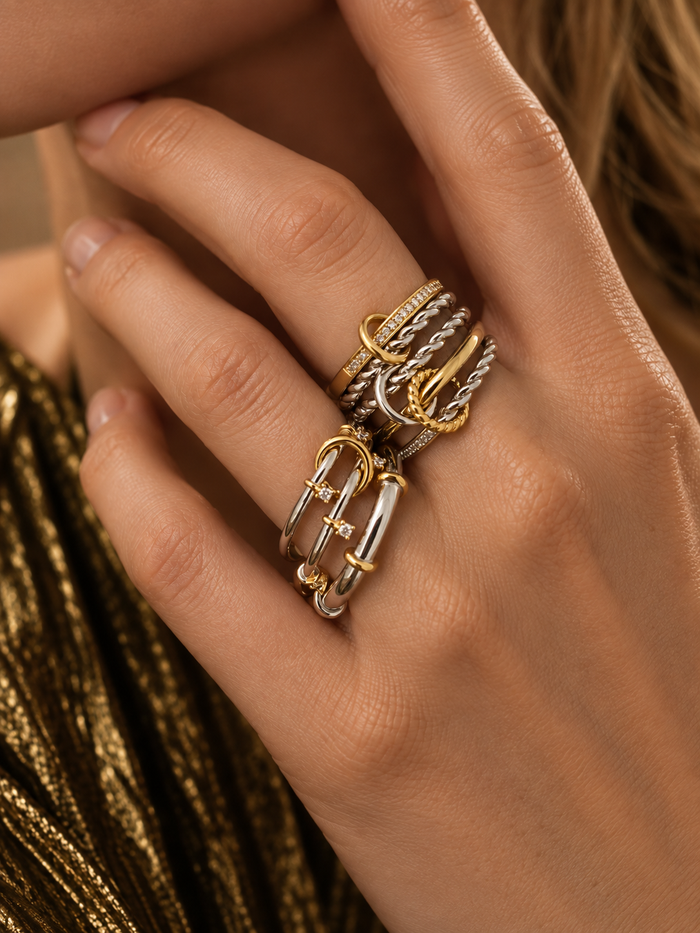
Yes. A mixed-metal charm necklace can look more intentional than a perfectly matched set when the metals are repeated rather than introduced once and forgotten.
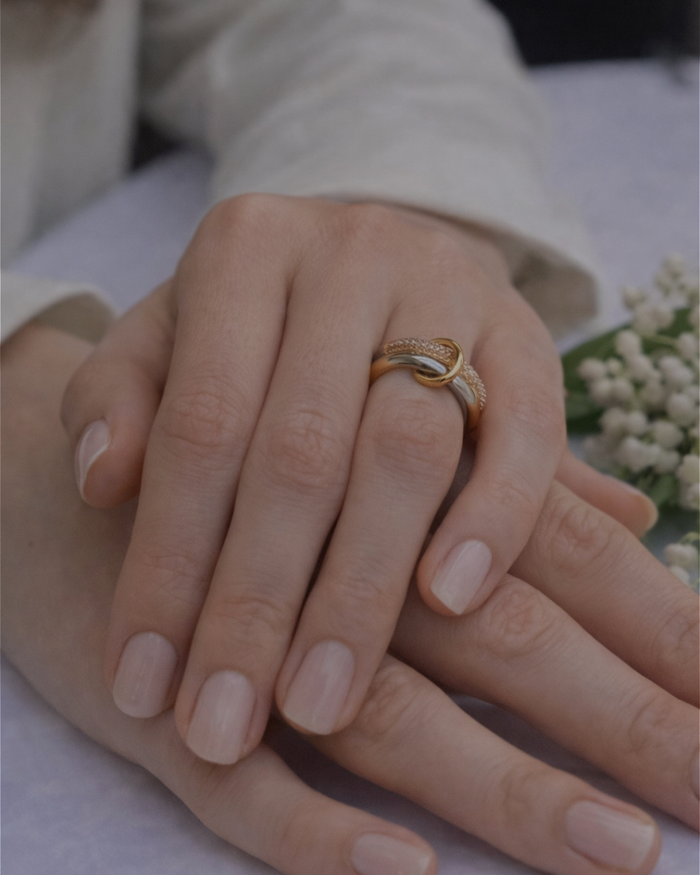
Try a gold chain with one gold charm and one silver or white-rhodium charm, or use a two-tone piece as the bridge between both finishes. Black rhodium can work as a third, graphic accent.
READ THE MIXED-METAL GUIDETHE EASY FORMULA
Repeat. Don’t match.
If one metal appears on the necklace, echo it somewhere else — another charm, a hoop, a ring or a bracelet. That repetition is usually enough to make silver and gold feel deliberate.
SHOP JEWELLERY CHARMSHow do you stop multiple charms from tangling?
When several charms sit on the same chain, a little overlap is part of the movement. To reduce crowding, give larger charms more space, avoid placing several bulky pieces on one very small link area, and check that each hook closes securely around the base.
If you are layering several charm necklaces rather than putting all the charms on one chain, use visibly different chain lengths. A combination such as 40 cm, 45–50 cm and 60 cm gives each layer its own level and reduces competition at the neckline. The Paperclip Necklace Guide has more on layering open-link chains.
What are interchangeable charms?
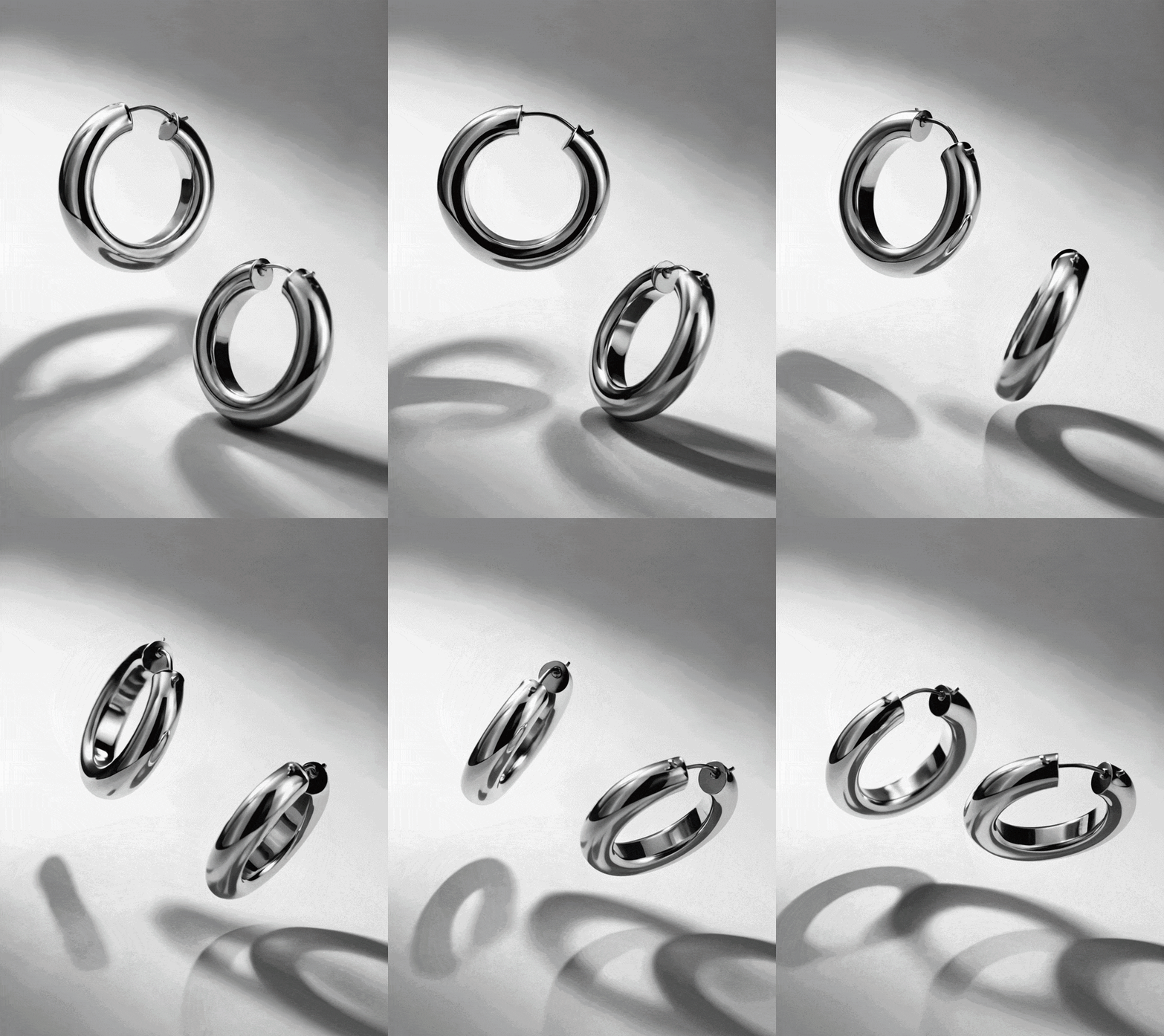
Interchangeable charm jewellery is designed so the decorative element is not permanently fixed to one base. A removable charm can move between compatible necklaces, bracelets, anklets, cords — and, depending on the size of the opening, selected hoops or huggies.
This is the idea behind Vittoria charm jewellery: the hook is part of the design, so the same charm can be unhooked, moved and styled again rather than staying on one necklace forever.
MODULAR JEWELLERY
One charm does not need one permanent home.
Wear it on a chain today, move it to a cord tomorrow, then hook it onto a compatible bracelet. That is the difference between simply owning a pendant and building a modular jewellery system.
BUILD YOUR OWN

Can the same charms be worn on a charm bracelet?
Yes — when the bracelet link or attachment point is compatible with the charm hook. This is one of the practical advantages of modular charm jewellery: the charm is not tied to one format.
For a charm bracelet, start with one focal charm and leave room for movement around the wrist. If you add more, distribute the visual weight rather than loading every charm onto the same small section. The same principle works on a charm anklet.
How to build your own charm jewellery in three steps
- Choose the base. Start with the necklace, cord, bracelet or anklet you would be happy to wear even without charms.
- Add the first charm. Decide whether you want a stone, symbol, protective motif or sculptural shape to lead the look.
- Change the composition. Add a second metal, move the charm to another link, switch the base or remove pieces when you want the jewellery to feel quieter.
There is no fixed final version. That is the point. Explore the complete charms collection, then see how we style them in THE LOOKS.
CHARM NECKLACE FAQ
The questions people actually ask.
Can you wear more than one charm on a necklace?
Yes. Two or three charms are an easy starting point, but there is no fixed limit. The chain needs enough room and strength for the size and weight of the charms, and each attachment should close securely.
How many charms look best on a necklace?
One gives a clean focal point, two create contrast, and three or more create a collected look. The best number depends on charm scale, chain length and how much movement you want.
What chain is best for multiple charms?
Open-link and paperclip chains are practical because individual links provide attachment points for removable hook charms. Cords are also useful when you want several charms grouped centrally.
Can you mix gold and silver charms on the same necklace?
Yes. Repeat both metals or use a two-tone piece to connect them. Mixing gold, silver, white rhodium and black rhodium can make the composition feel more individual rather than mismatched.
How do interchangeable necklace charms work?
Interchangeable charms use a removable hook or clasp rather than a permanently closed attachment. The charm can be opened, attached to a compatible base and moved again when you want a different combination.
Can necklace charms be used on bracelets or anklets?
Yes, if the hook fits securely through the bracelet or anklet link. Always check the charm opening and the dimensions of the base before attaching it.
Can charms be worn on hoop earrings?
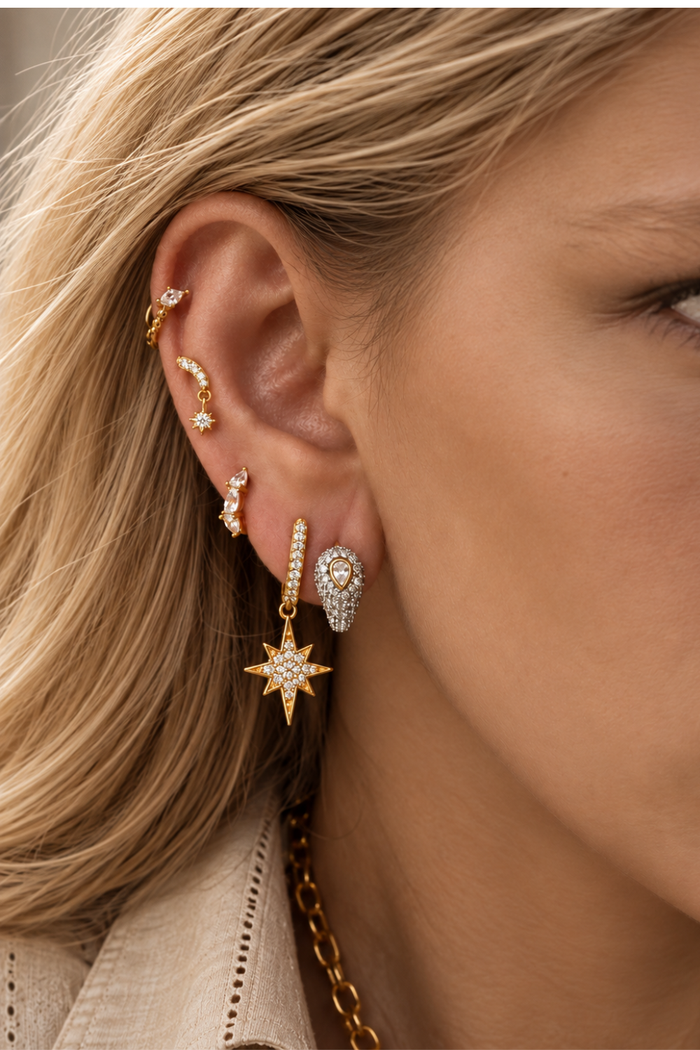
Smaller charms can be worn on compatible hoops or huggies when the opening fits securely and the added weight remains comfortable. Check the individual product dimensions before combining them.
HOOK. UNHOOK. REPEAT.
Build it once. Then keep changing it.
Start with the base, add one charm, then change the combination whenever the mood changes. Necklace today. Bracelet tomorrow. Gold, silver or both.
BUILD YOUR OWN CHARM JEWELLERY

