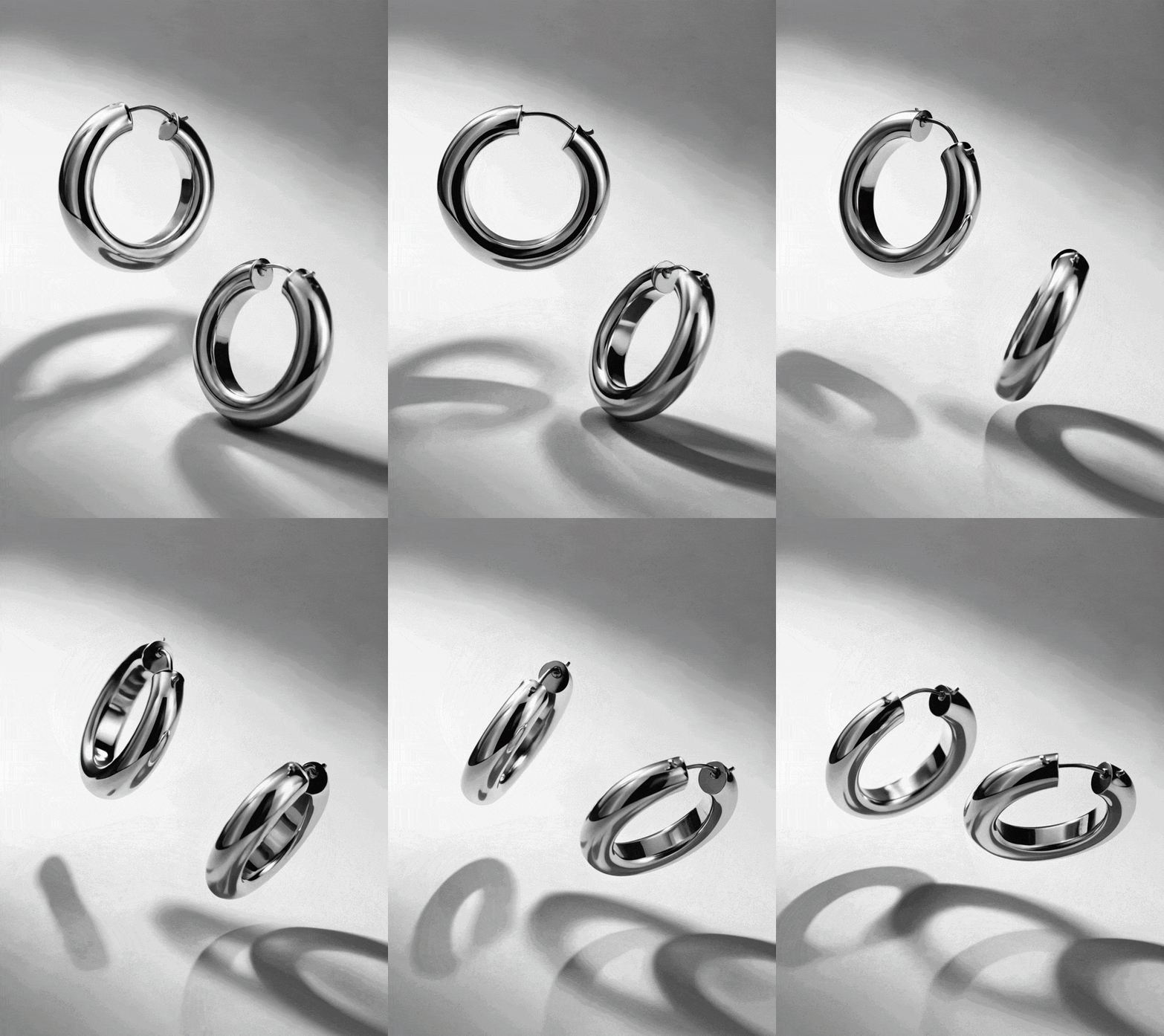
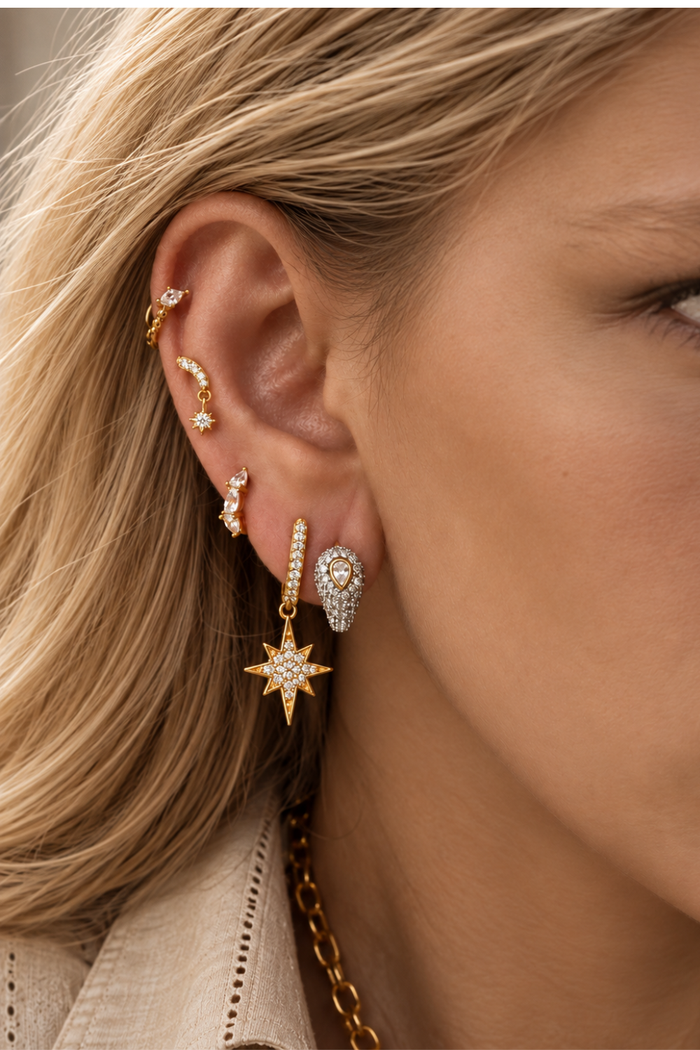
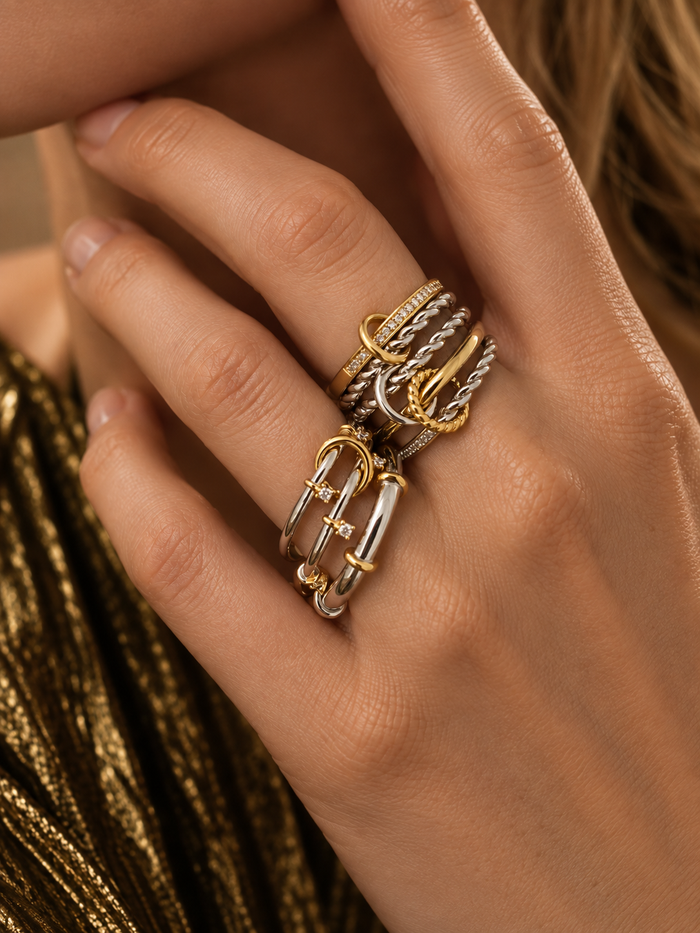
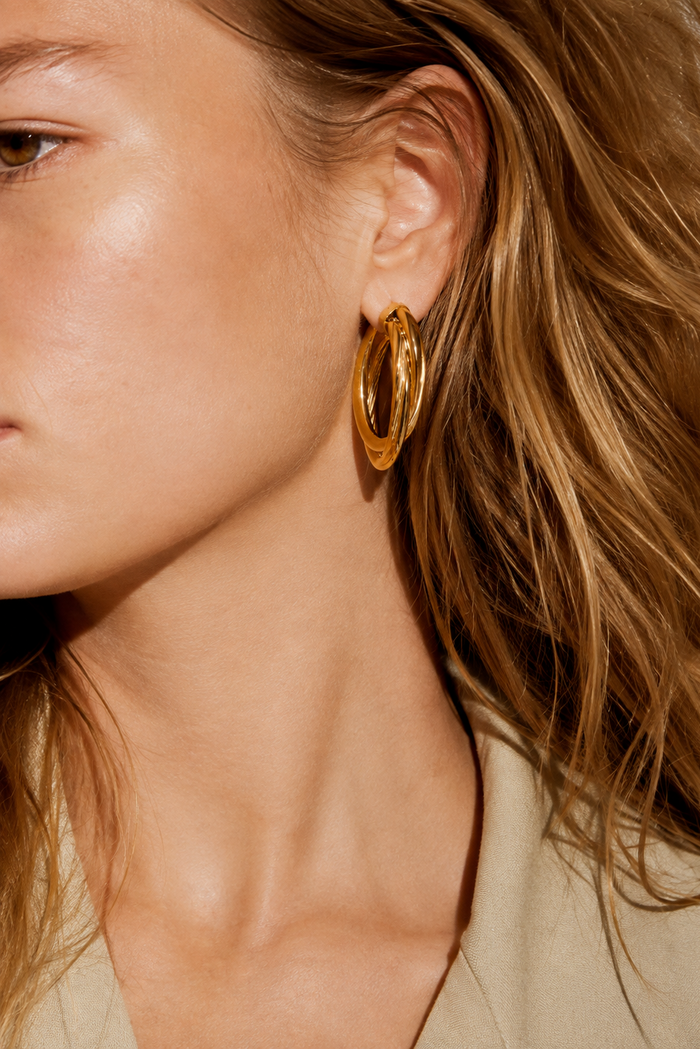




The Sensitive-Skin Guide
What Is Hypoallergenic Jewellery?
What does the label really tell you? Consider this the clear guide to nickel release, jewellery materials, plated finishes and the details worth checking before a piece meets your skin.
Shop Hypoallergenic JewelleryThe 60-Second Answer
What Does Hypoallergenic Jewellery Mean?
Hypoallergenic jewellery is designed to be less likely to cause an allergic reaction. It is not guaranteed to suit every wearer, so the material, finish and parts that touch the skin still matter.
The label is a useful starting point. The material details are the part worth reading.
Less Likely, Not Allergy-Proof
Different people can react to different metals, coatings or finishes. “Hypoallergenic” describes a reduced risk rather than a universal guarantee.
Skin Contact Matters
An earring post, ring band, necklace chain or bracelet clasp may sit directly against the skin for hours. Check the materials used in these contact points, not only the visible decorative surface.
Full Material Disclosure
A useful product description should identify the base material, outer finish and any separate components, including posts, fastenings, clasps or chain parts.
Similar, Not Identical
Hypoallergenic vs Nickel-Free Jewellery
The two labels answer different questions. Hypoallergenic refers to the likelihood of a reaction. Nickel-free refers specifically to nickel and does not tell you everything about the base metal, finish or other components.
Hypoallergenic Jewellery
Jewellery designed to minimise the likelihood of an allergic reaction. The claim should be supported by appropriate materials, finishes, construction and testing.
A reduced likelihood of irritation or allergy rather than the complete absence of every possible allergen.
Clear information about the base material, outer finish and components that sit directly against the skin.
That every wearer will remain reaction-free, because personal sensitivities and patterns of wear differ.
Nickel-Free Jewellery
A claim concerning nickel specifically. It does not automatically explain which other metals are present or how the completed piece may behave during prolonged contact with the skin.
One particular metal rather than the complete construction or potential suitability of the finished jewellery.
The base alloy, plating, solder, clasp, chain components or other materials used in the finished piece.
That the wearer will not react to another material, coating, residue or source of friction.
Jewellery Rules Focus on Nickel Release
For jewellery intended to remain in direct and prolonged contact with the skin, UK and EU requirements regulate how much nickel may migrate from the finished piece during wear. A vague marketing label is not a substitute for compliant materials and product-specific testing.
What Is the Base?
Look for the metal underneath the visible gold, silver or mixed-metal finish.
What Is the Finish?
Check whether the surface is gold-plated, white-rhodium finished or left as the underlying metal.
What Touches the Skin?
Pay attention to ring bands, chains, clasps, bracelet links and earring posts or fastenings.
Regulatory guidance: EU REACH Annex XVII · UK Health Security Agency
The Material Map
Which Jewellery Materials Matter Most?
A jewellery piece can include several different materials. The visible surface is only one part of the story. The base, plating, solder, clasp, chain, ring band or earring post may each come into contact with the skin.

When a Larger Surface Touches the Skin
Ring bands, chains and bracelet links may remain against the skin for hours. Their base material, coating and condition can all affect how the piece feels during prolonged wear.
The base metal and finish used across the complete ring band, chain or bracelet—not only the decorative front.
Worn plating, rough edges or damaged surfaces at points that remain in direct contact with the skin.

When the Post Passes Through the Ear
Earrings require extra attention because the post sits inside the piercing and the fastening rests directly behind the ear. These components can differ from the visible earring body.
The material used for the post, hinge, hook, butterfly back or ball-screw fastening.
Fashion earrings should be introduced only after the piercing is fully healed unless a professional piercer approves the exact piece for initial use.
Materials and Finishes You May See
No material name should be read in isolation. The alloy, coating, construction, testing and condition of the completed piece all contribute to its suitability.
925 Sterling Silver
92.5% SilverFrequently used for rings, studs, huggies, chains and earring posts. The remaining alloy and the finish applied to the completed piece should still be checked.
24ct Gold Plating
The Outer FinishCreates the warm gold surface over a disclosed base material. Protect the finish from abrasive cleaning and inspect areas that remain in frequent contact with the skin.
White Rhodium
The Silver-Tone FinishProvides a polished cool-toned surface on selected silver-coloured pieces. Like any finish, it should be cared for gently and checked if wear becomes visible.
Plated Brass
For Sculptural ShapesOften used to create larger jewellery shapes without the weight or price of solid precious metal. The finish and separate skin-contact components should be clearly disclosed.
Read the Whole Product Description
Look for the base material, finish and separate contact components. A gold-coloured ring, silver-coloured necklace or statement earring may combine more than one material.
Shop Hypoallergenic JewelleryClean, Dry, Store
How to Care for Hypoallergenic Jewellery
Good care helps protect both the jewellery surface and the areas that sit against the skin. Clean gently, dry thoroughly and inspect the points that receive the most wear.
Wipe After Wearing
Use a clean, soft and lint-free cloth to remove skincare, sweat and visible residue from ring bands, chains, clasps and earring posts.
Clean Gently
Where the product instructions permit, use lukewarm water and a small amount of mild soap. Avoid aggressive rubbing or stiff brushes.
Dry Completely
Pat the jewellery dry and allow moisture to leave hinges, clasps, chain links and threaded fastenings before wearing or storing it.
Store Separately
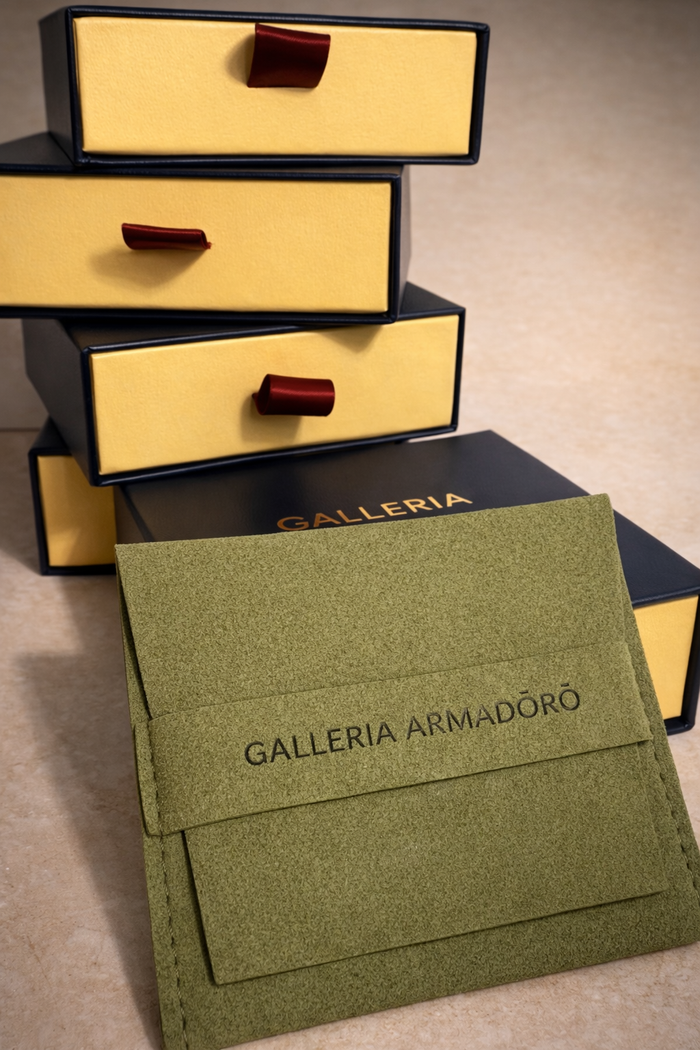
Keep pieces in a dry jewellery box or soft pouch so polished and plated surfaces do not rub against one another unnecessarily.
Protect the Surface That Meets the Skin
24ct Gold-Plated Jewellery
Avoid abrasive cleaners and vigorous polishing. Check areas such as ring bands, chain links and earring posts if the finish becomes visibly worn.
White-Rhodium Finishes
Use a soft cloth and gentle cleaning method. Store pieces separately to help protect the polished silver-toned surface.
Sterling Silver
Remove residue regularly and use only a cleaning method approved for the complete design, particularly when stones or specialist finishes are present.
Mixed-Material Pieces
Follow the care instructions for the most delicate component rather than assuming that every part can be cleaned in the same way.
Do
- Apply perfume, hairspray and skincare before putting jewellery on.
- Let products dry before necklaces, rings or bracelets meet the skin.
- Clean earring posts and fastenings before first wear.
- Check clasps, chain links, ring bands and earring posts regularly.
Avoid
- Bleach, acetone and harsh household cleaning products.
- Abrasive powders, rough cloths and hard-bristled brushes.
- Storing jewellery while it is damp or covered in residue.
- Continuing to wear a piece with a rough or damaged contact point.
When Should You Stop Wearing a Piece?
Pause wear if a clasp, chain, ring band, post or fastening becomes rough, damaged or uncomfortable. Persistent redness, itching or swelling deserves attention rather than another day in the jewellery box rotation.
Warranty & RepairsAlways follow the care instructions supplied for the individual piece. Jewellery containing stones, enamel or specialist finishes may require a different cleaning method.
The Jewellery Edit
Shop Hypoallergenic Jewellery by Category
Earrings, rings, necklaces, bracelets and anklets—each with its own fit, finish and points of skin contact. Choose your category, then read the complete material details on the individual product page.
 01
01
Earrings
Lightweight hoops, huggies, studs, ear climbers and ball-screw styles designed with sensitive ears in mind.
Shop Earrings 02
02
Rings
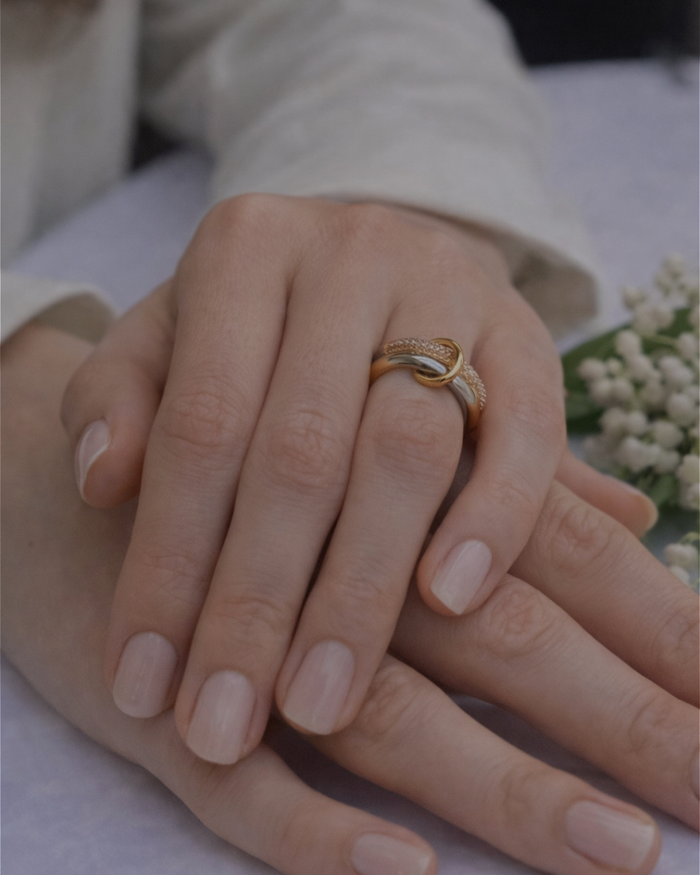
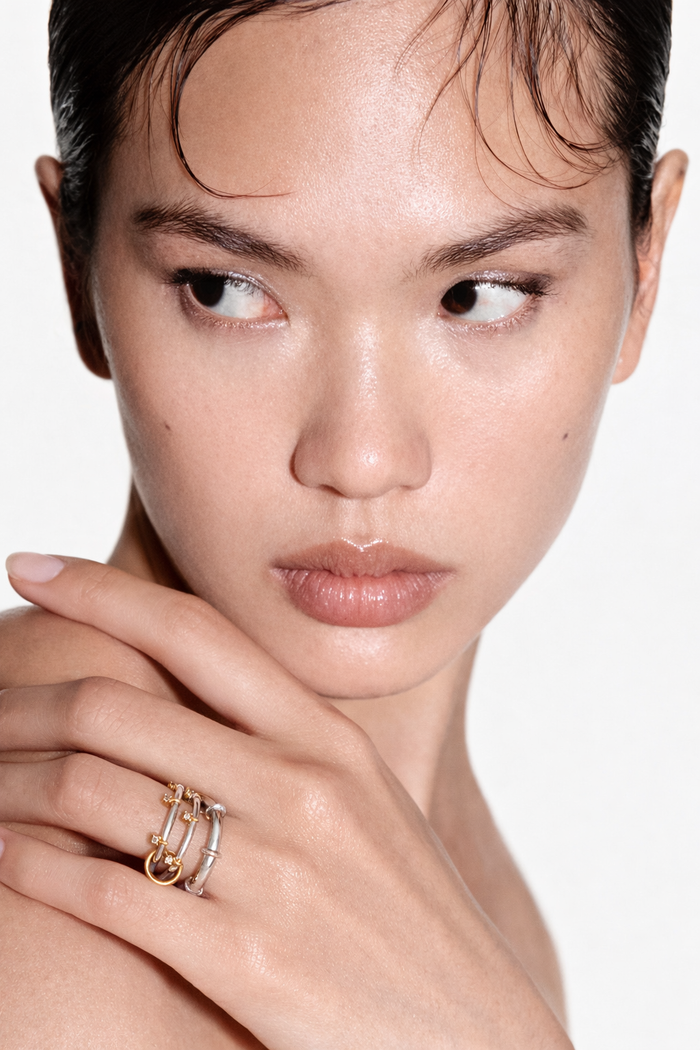
Stacking bands, linked rings and sculptural shapes made to be worn alone, layered or arranged differently each day.
Shop Rings 03
03
Necklaces
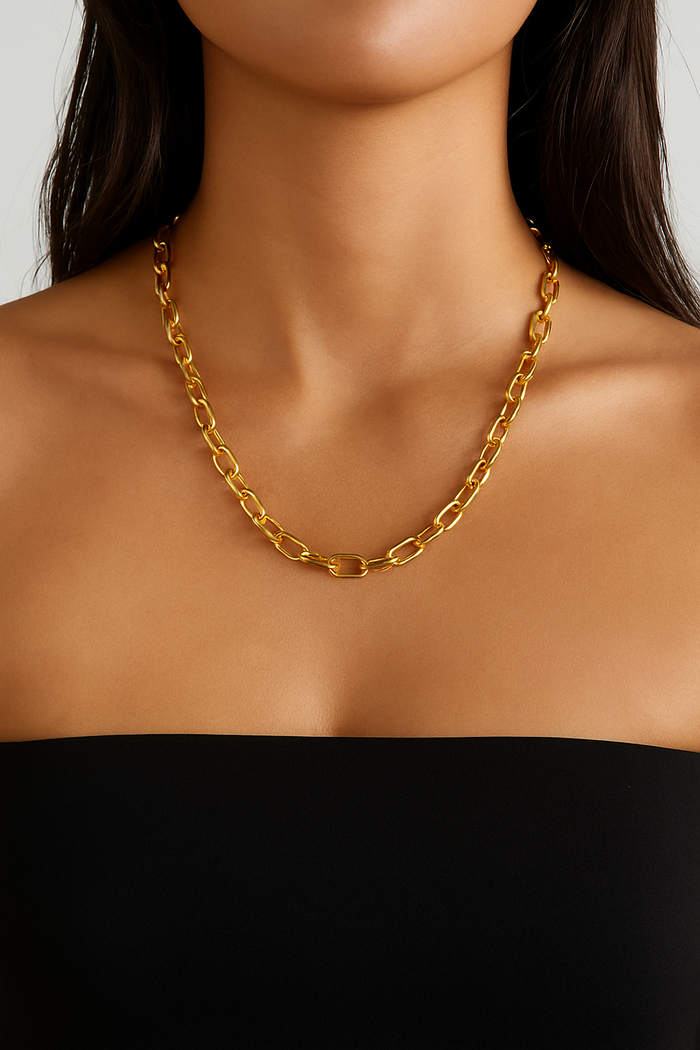
Adjustable chains, paperclip links and layering necklaces ready for charms, mixed lengths and considered combinations.
Shop Necklaces 04
04
Bracelets
Polished links, adjustable chains and charm-ready bracelets for a wrist stack that mixes gold, silver and personal detail.
Shop Bracelets 05
05
Anklets
Fine chains, chunky links and charm details designed to sit neatly around the ankle alone or layered together.
Shop AnkletsQuestions, Answered
Hypoallergenic Jewellery FAQ
Clear answers about sensitive skin, jewellery materials, nickel release, plated finishes and what to check before buying.
A useful label begins the conversation. The full material description finishes it.
What is hypoallergenic jewellery?
Hypoallergenic jewellery is designed to be less likely to cause an allergic reaction. The term does not guarantee that every wearer will remain reaction-free, so the base material, finish and skin-contact components should still be checked.
Does hypoallergenic mean allergy-proof?
No. Individual sensitivities differ, and discomfort can also be caused by friction, trapped moisture, residue or a damaged surface rather than an allergy to the jewellery itself.
Is hypoallergenic jewellery the same as nickel-free jewellery?
Not exactly. Hypoallergenic describes a reduced likelihood of an allergic reaction. Nickel-free refers specifically to nickel and does not explain every other metal, coating, clasp, chain or component used in the completed piece.
Why does nickel release matter?
UK and EU jewellery rules restrict the amount of nickel that may migrate from parts intended for direct and prolonged contact with the skin.
The permitted release limit is stricter for post assemblies inserted through pierced ears or other pierced areas than it is for rings, chains, bracelets, anklets and other skin-contact jewellery.
Is 925 sterling silver hypoallergenic?
Sterling silver contains 92.5% silver and 7.5% other metals. It can suit many sensitive wearers, but the remaining alloy, surface finish and construction of the completed piece still matter.
Check the individual product description rather than assuming that every item marked “925” will suit every person.
Is gold-plated jewellery suitable for sensitive skin?
Gold-plated jewellery can suit many people with sensitive skin when the base material, finish and skin-contact components are clearly disclosed and the completed piece complies with applicable nickel-release limits.
Stop wearing the piece if the plating becomes damaged at a point that rests directly against the skin and irritation develops.
Can brass jewellery be hypoallergenic?
Brass may be used as the base of a plated jewellery design, especially where a sculptural shape needs to remain lightweight and affordable.
Suitability depends on the complete alloy, outer finish, construction and any separate parts that touch the skin.
What should I check before buying hypoallergenic jewellery?
Look for the base material, outer finish and the components that will sit directly against the skin. These may include a ring band, necklace chain, bracelet clasp, anklet links or an earring post and fastening.
Product-specific material information is more useful than a vague brand-wide claim.
Can hypoallergenic earrings be worn in a new piercing?
Not automatically. Jewellery for a fresh or healing piercing should be selected and fitted by a qualified professional piercer using a documented material and construction suitable for initial healing.
Gold-plated and sterling-silver fashion earrings should otherwise be introduced only after the piercing is fully healed. Read our hypoallergenic earrings guide for more detailed advice.
Can hypoallergenic jewellery still irritate the skin?
Yes. A piece may feel uncomfortable because of friction, pressure, moisture, product build-up or a rough or damaged surface. This does not always mean that the wearer has a metal allergy.
Stop wearing the piece if persistent itching, redness or swelling develops. Seek advice from a clinician or dermatologist if symptoms are severe or do not settle.
How should hypoallergenic jewellery be cleaned?
Wipe jewellery regularly with a soft, lint-free cloth. Where the product instructions permit, clean it gently with lukewarm water and a small amount of mild soap, then dry it completely.
Avoid abrasive cleaners, bleach and aggressive polishing, particularly on plated, white-rhodium or mixed-material pieces.
Where can I buy hypoallergenic jewellery?
Explore Galleria Armadoro’s gold and silver jewellery collection for earrings, rings, necklaces, bracelets and anklets designed with sensitive skin in mind.
Materials vary by design and are listed on each individual product page.
Ready to browse? Begin with the category you wear most, then check the complete material, finish and skin-contact details on the individual product page.
Shop Hypoallergenic JewelleryGuidance: EU REACH Annex XVII · Association of Professional Piercers · NHS
Better Jewellery Information
Choose the Piece. Read the Details.
Hypoallergenic jewellery begins with considered materials and clear information. Check the base, finish and parts that touch the skin—then choose the rings, chains, earrings and bracelets you will enjoy wearing.
Find out what sits underneath the visible gold or silver-toned surface.
Look for clearly disclosed 24ct gold-plated, white-rhodium and polished finishes.
Consider ring bands, chains, clasps, links, earring posts and fastenings.
Materials vary by design and are listed on the individual product page. Hypoallergenic means less likely to cause a reaction, not allergy-proof for every wearer.


