

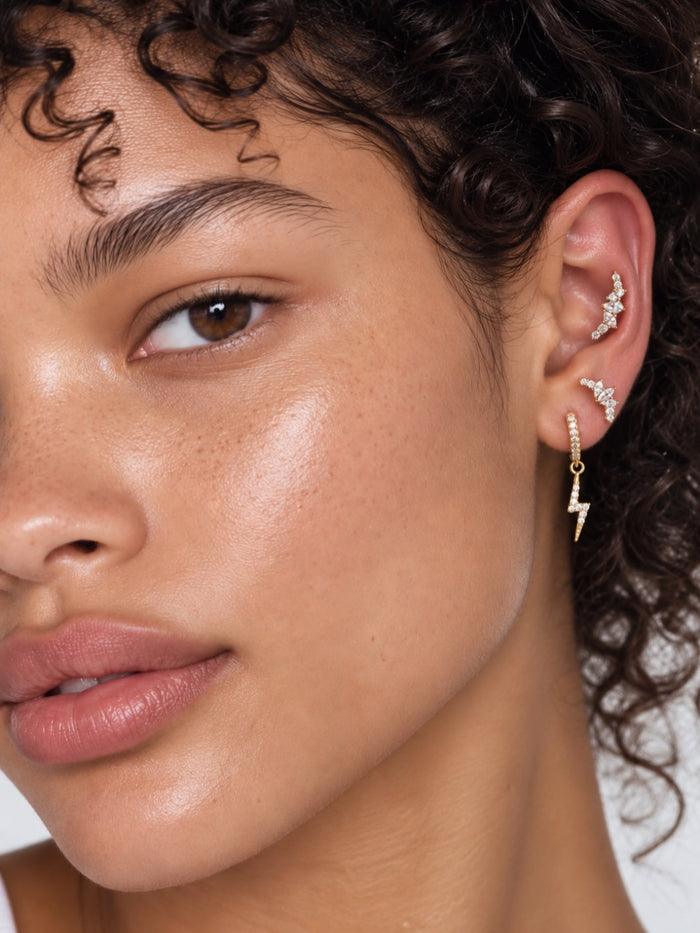
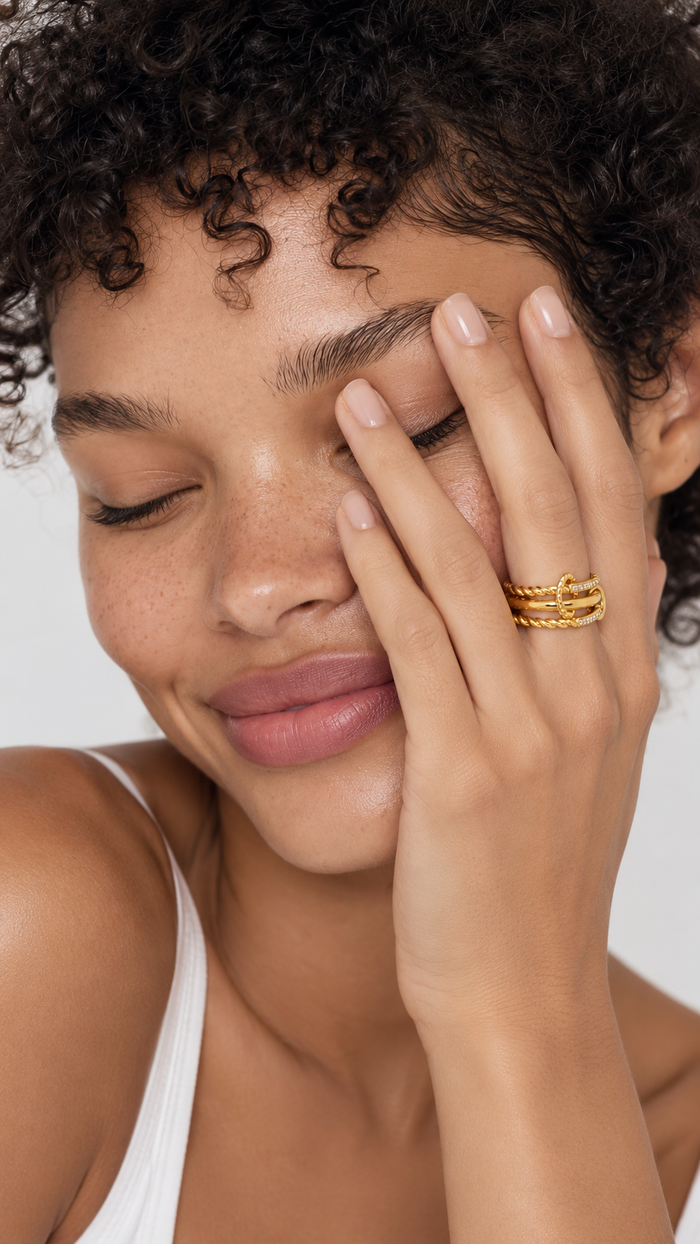


Ear Stories · The Huggie Guide
What Are Huggie Earrings?

Small hoops. Plenty to say.
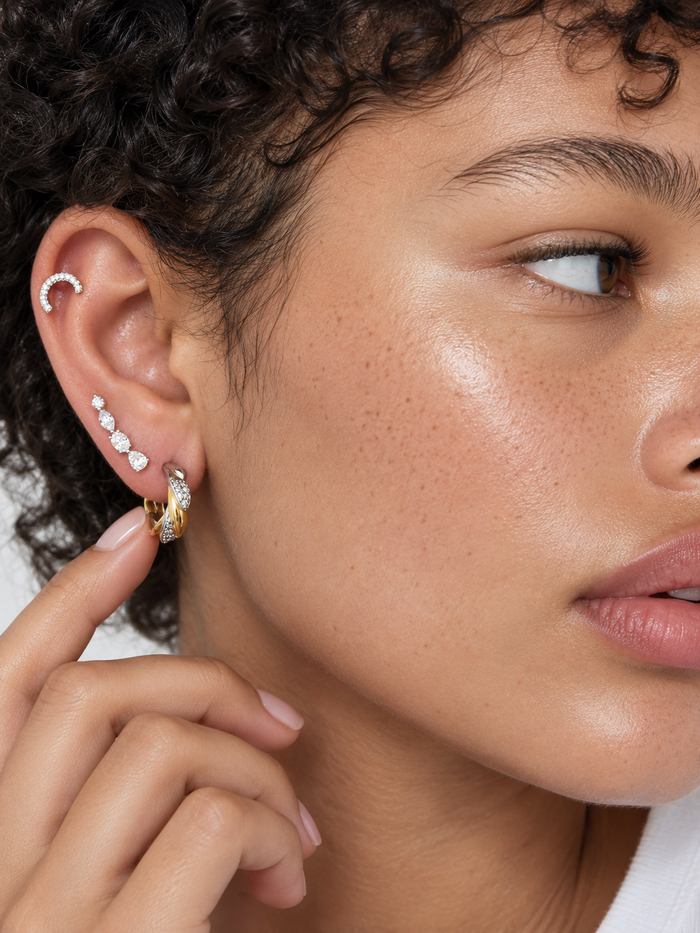
Huggie earrings are small hoops designed to sit close to the earlobe. Many have a hinged fastening that clicks shut, creating a neat, continuous shape. Their fit depends on the hoop’s inner diameter, your piercing position and your ear.
The starting point
Your Ear Story starts here.
Worn alone, they keep things simple. Layered with studs, charms and other hoops, they become the starting point for your own Ear Story.
Here’s how to choose your size, understand the materials and put it all together.
The close-up
Huggies vs Hoops:
What’s the Difference?
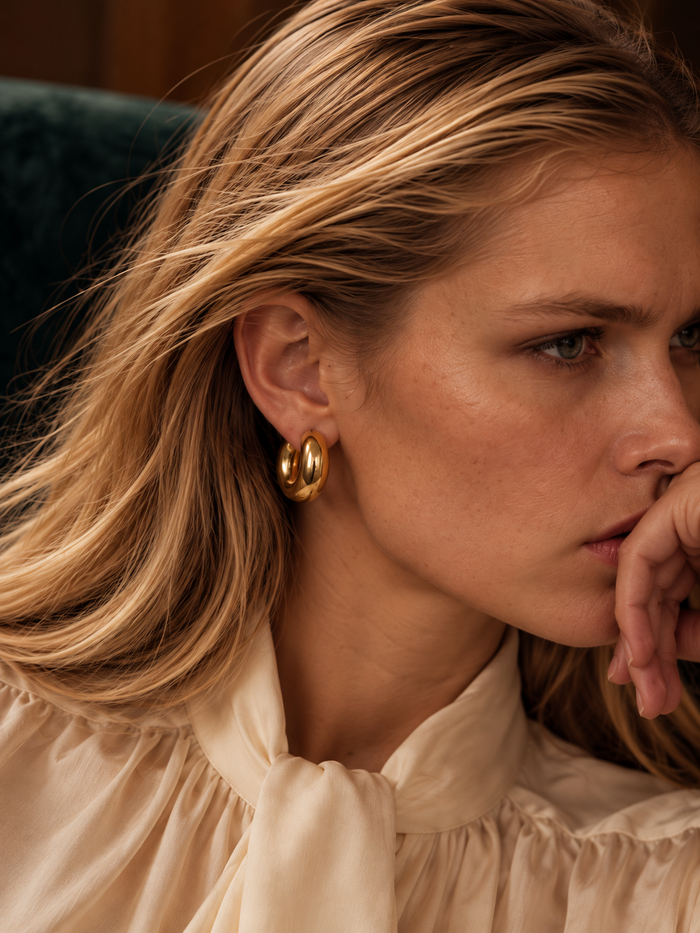
Huggies are a type of hoop earring. The difference is how they sit: a huggie is designed to follow the ear closely, while a larger hoop leaves more visible space beneath the lobe. Both can be simple, sculptural or set with stones.
| At a glance | Huggie earrings | Larger hoop earrings |
|---|---|---|
| The fit | A close fit around the lobe, with enough clearance to avoid pinching. | A more open outline, with the hoop extending further below the ear. |
| The size | The inner diameter helps determine whether the hoop will fit your piercing position. | Diameters vary widely. Check whether the listed measurement is the inner or outer diameter. |
| The fastening | Often a hinged fastening that clicks shut. Check the individual design. | May use a hinge, a post and back, or a wire fastening, depending on the style. |
| The styling | A compact starting point for an Ear Story, worn alone or alongside studs and other hoops. | A more pronounced silhouette, worn as the main event or balanced with smaller pieces. |
Close to the ear.
Open to interpretation.
Choose huggies for a close-fitting outline; choose a larger hoop when you want more space and presence. For a layered look, pair a larger hoop in the first lobe with a smaller huggie above it, adjusting each size to your own piercings.
“Huggie” describes the intended fit, not one universal size. The same earring can sit differently on two ears.
Shop huggie earringsA matter of millimetres
6.5 mm, 8.5 mm or 11 mm?
Find your huggie size.
These huggie sizes refer to the inner diameter: the space inside the hoop. A smaller number gives less room around the lobe; a larger number gives more. Your piercing position and preferred fit help determine which size to choose.

Your fit, in three steps
How to Measure
for Huggie Earrings
A comfortable huggie sits close without squeezing. Use a millimetre ruler and check each piercing separately; your two ears may need different sizes.
-
Start with an existing hoop.
If you have a round hoop that fits that piercing comfortably, close it and lay it flat. Measure straight across its inside opening, from inner edge to inner edge. Compare this with the stated inner diameter.
-
Measure the lobe.
No hoop to compare? Hold a millimetre ruler beside your ear and measure from the centre of the piercing to the lower edge of the lobe, without stretching it. Treat this as a starting measurement.
-
Leave a little breathing room.
Allow clearance for your lobe and the hoop’s shape. The closure should meet without pulling the lobe, pinching skin or needing force. If the fit feels tight, stop and reassess the size.
These at-home checks are for healed lobe piercings. For cartilage, new or healing piercings, ask a qualified piercer to assess fit and suitable jewellery. Read the Association of Professional Piercers’ guidance.
A little click. That’s it.
How to Open and Close
Huggie Earrings
For a hinged, click-close huggie, gently release the post from the clasp to open it. To close, align the post with the clasp and bring the two halves together until they click into place. A light touch is all you need.

How to open a huggie
- With clean, dry hands, hold the front of the hoop steady and find the join where the post meets the back.
- Use a fingernail to gently ease the post out of the clasp. Let the back swing open on its hinge.
- Keep the movement gentle. Avoid twisting the hoop sideways or bending the post.

How to close a huggie
- Gently guide the post through your healed piercing. It should pass through without being forced.
- Align the tip with the opening in the clasp. Bring the two halves together until you feel a small click.
- Check that the post is seated, the clasp stays shut and no skin is caught. Stop squeezing once it is fastened.
See the click.
The hinged back swings towards the curved post until the two meet and the hoop closes. Press play to watch, then replay whenever you need a closer look.
Your ear. Your rules.
How to Style
Huggie Earrings
Wear a huggie alone for a clean finish, pair it with a stud for contrast, or build an ear stack with different sizes and textures. Start with the piercings you have. Give each piece a little space.
-
One piercing.
Make it count.A polished huggie keeps the line simple; pavé adds a little light. For more movement, choose a huggie designed to take a detachable charm. You can change the mood without adding another piercing.
-
Two piercings.
Find the balance.Try a huggie in the first lobe and a smaller hoop or stud in the second. Let one piece lead: a charm beside a clean hoop, or a stone-set huggie beside a simple stud. Leave room for both to sit comfortably.
-
Three or more.
Build your Ear Story.Graduate the visible hoop sizes along the lobe, then break up the rhythm with a stud or a different finish. Keep a shared detail—colour, shape or texture—to bring it together. The two ears do not have to match.
Choose the fit for each piercing before choosing the arrangement. A smaller-looking hoop is not automatically the right size for a higher piercing. Use the huggie size guide and check each position separately.
Ear Stories.
Already styled.
Borrow the balance, change the details. Explore the pieces in each Look and make the combination your own.
Find more combinations in THE LOOKS, or start with a huggie and build from there.
Shop the LookOne huggie. Two ways to wear it.
Huggie Earrings:
With or Without a Charm?
A detachable earring charm adds a different drop and movement to a compatible huggie. Remove it to wear the base earring on its own; add it again for a longer silhouette. Here, the same 8.5 mm Simple Shaker does both.

The huggie, on its own.
The 8.5 mm Simple Shaker, worn without the extra Vittoria charm. Its two small white cubic zirconia stones provide the detail, including a delicate dangling accent.
Explore 8.5 mm huggies
Now, add Vittoria.
The same huggie, finished with a removable black-and-gold Vittoria teardrop. The longer drop adds movement and contrast: a small change with a rather different effect.
Explore charm huggiesStyling comparison. Photographs are not shown to scale.
How to Add or Remove
a Huggie Charm
-
01 / Open it off the ear
Take the huggie off and open the clasp. Hold the hoop and charm securely so neither can slip from your fingers.
-
02 / Slide the loop
For this Simple Shaker and Vittoria pairing, carefully slide the charm’s attachment loop over the open post. Reverse the movement to remove it.
-
03 / Check the closure
Let the charm hang freely, then check that the huggie closes securely. Never force the loop over a thicker part of the hoop.
The finish is personal
Gold, Silver or Both?
Choose Your Huggie Finish.
Gold huggie earrings bring warmth; silver huggies bring a cooler shine. Wearing the two together adds contrast. Choose the colours you love, then check the underlying metal and surface finish: colour alone does not tell you what an earring is made from.
Gold huggies
A warm starting point for your Ear Story. Keep the finish consistent and vary the shape: a close-fitting huggie, a small stud, then a little movement from a charm.
Try thisRepeat the gold tone in one other piece, such as a necklace, to bring the look together.
Silver huggies
A cool, bright finish that lets shape and texture come forward. Pair a simple silver huggie with a stone-set design for a subtle change of rhythm.
Try thisKeep one finish throughout your stack and graduate the hoop sizes where your piercings allow.
Mixed metals
Gold and silver can sit beautifully together. For an easy starting point, choose one dominant tone and add a single contrasting huggie or stud.
Try thisRepeat a detail, such as a rounded shape or white stone, to connect the different finishes.
What are your
huggies made from?
Read the materials description in two parts: the metal underneath and any plating on its surface. If you are adding a charm, check its specification separately too.
- 925 sterling silver
- Sterling silver contains 92.5% silver, with other metals making up the remainder. A sterling-silver base can have a silver-coloured finish or be plated with gold.
- Gold-plated silver
- A layer of gold covers a silver base. The Simple Shaker huggie shown above is 18ct gold-plated 925 sterling silver. The 18ct description refers to the gold plating; the earring is not solid gold. For pieces labelled vermeil, check the silver base, gold fineness and any stated plating thickness.
- Rhodium plating
- This is a surface finish. For example, GA’s Single Shaker sterling silver huggie has white rhodium plating over 925 sterling silver. Always read the individual design’s details rather than assuming every silver-coloured earring has the same finish.
- Huggie and charm: check both
- The Vittoria charm shown above has a brass base with 24ct gold plating and black rhodium detailing. Its material specification is different from the gold-plated sterling-silver huggie it hangs from.
Comfort deserves a little attention
Are Huggie Earrings Good for Sensitive Ears?
They can be, provided the materials suit your skin, your piercing is fully healed and the hoop fits without pressure. A huggie’s close fit does not, by itself, make it hypoallergenic. The materials and the fit deserve equal attention.
What earrings are best for sensitive ears?
For fully healed piercings, the best everyday earrings for sensitive ears have clearly specified materials, a smooth post and a comfortable fit. Nickel is a common cause of contact allergy. Implant-grade titanium is an option for people with known metal sensitivities; 925 sterling silver can also suit many wearers. No metal, however, is guaranteed to be allergy-free for everyone.
Looking for gold huggie earrings for sensitive ears? Look beyond the colour. Galleria Armadoro huggies have 925 sterling silver posts, with gold-plated or rhodium-plated sterling silver finishes depending on the design. Check the individual product's base metal and plating, along with the post, hinge, clasp and any detachable charm. Our laboratory-testing results relate to the jewellery samples assessed, not a promise that every wearer will be reaction-free. If itching or soreness returns, remove the earrings and ask a dermatologist about possible contact allergy.
How should a comfortable huggie feel?
Close to the ear, with room for your lobe to sit naturally. It should not pinch, pull or leave a deep indentation. Choose the inner diameter for your piercing position, and check the post thickness too. The smallest hoop is only the right choice when it fits your ear.
Can I wear huggies in a new piercing?
Choose GA huggies for fully healed piercings. Fresh and healing piercings need jewellery selected by a qualified piercer for the placement, material and fit. Keep gold-plated and vermeil styles for after healing, and ask your piercer before changing jewellery.
If a piercing becomes hot, swollen, painful or leaks pus, seek prompt medical advice. If infection is suspected, leave the jewellery in unless a clinician advises otherwise.
Further reading: nickel allergy guidance from the American Academy of Dermatology; jewellery for new piercings from the Association of Professional Piercers; piercing infection guidance from the NHS.
Keep them in rotation
How to Care for Huggie Earrings
A little care keeps your favourites ready for their next outing. Wipe huggies gently after wear, protect plated finishes from water and cosmetics, and store each piece separately once completely dry.
How do you clean plated huggies?
-
01 / Start with a soft cloth
Remove your huggies with clean hands and gently wipe the hoop, post and clasp with a dry, lint-free cloth. Support delicate settings and detachable charms as you work.
-
02 / Lift residue gently
Where the design’s care instructions allow, use a barely damp cloth with lukewarm water and a tiny drop of mild washing-up liquid. Wipe away soap with a second clean, lightly dampened cloth. Avoid soaking or scrubbing.
-
03 / Dry, then put away
Pat dry immediately and let the hinge and clasp dry completely. Store huggies and removable charms separately in a soft pouch or divided jewellery box to limit rubbing and tangling.
For plated finishes: avoid toothpaste, baking soda, silver dip, abrasive polishing cloths, alcohol and peroxide. Stone-set designs need care suited to their most delicate component.
Read the earring cleaning guideCan you shower or swim in huggies?
For GA’s plated huggies, remove them before showering or swimming to help preserve the finish. Apply perfume, hairspray and lotions before putting your jewellery on. A water-resistant charm does not automatically make the huggie it hangs from water-resistant; check each component’s care instructions.
Can you sleep in huggie earrings?
For fully healed piercings, we recommend taking huggies out before bed to reduce pressure on your ears and strain on clasps, settings and charms. While a piercing is healing, follow your piercer’s instructions about keeping jewellery in place.
The final details
Huggie Earrings: Your Questions, Answered
A few things to check before choosing your next pair. Or your next single.
Are huggies sold singly or in pairs?
Check the quantity stated in the product description. “Sold individually” means one earring. For a matching pair of a style sold singly, choose a quantity of two. For charm combinations, check whether the listing includes the huggie, the charm or both.
Can I wear huggie earrings every day without taking them out?
Huggie earrings can be a comfortable everyday choice for fully healed piercings when the size, post and fastening suit your ear. But wearing huggies every day is not the same as leaving them in 24/7. For Galleria Armadoro's plated huggies, we recommend removing them before sleeping, showering or swimming to avoid unnecessary pressure, protect the clasp and help preserve the finish.
Fresh or healing piercings need different care: follow your qualified piercer's advice rather than routinely removing their jewellery. If you want earrings designed to remain in continuously, ask a professional piercer about an appropriate fit and material, such as implant-grade titanium. If a hoop pinches or causes itching or soreness, reassess the fit and material. Compare our huggie sizes and care advice before choosing your everyday pair.
Do huggie earrings need pierced ears?
Yes. The GA huggies in this guide have a post that passes through a piercing. They are different from ear cuffs, which grip around the ear without passing through it. Our ear cuff guide explains their fit, placement and styling. Choose huggies for fully healed piercings.
What size huggie suits a second piercing?
There is no universal second-piercing size. The distance from that piercing to the edge of your lobe determines the space you need. Compare 6.5 mm, 8.5 mm and larger inner diameters using the size guide; check the post thickness as well as the hoop’s clearance.
Are huggies the same as mini hoops?
The terms can overlap, but they describe different things. A huggie is designed to sit close to the ear; “mini hoop” describes a small hoop that may hang further below the lobe. Check the measurements and compare the fit, rather than choosing by the name alone.
Can I wear one huggie on its own?
Absolutely. Wear one as a small focal point, balance it with a stud on the other ear, or add it to an existing stack. Matching ears are optional. See our Ear Stories styling ideas for a starting point.
Your next Ear Story
Find Your Huggies.
Start with the fit. Then choose the finish, the stones and the little details that make them yours. These edits bring the options together by size.
6.5 mm
The most compact of these three sizes. Explore it when your piercing sits close to the lobe’s edge and the hoop has room to close comfortably.
Shop 6.5 mm huggies8.5 mm
A little more space around the lobe. Browse gold and silver designs, then check the inner diameter against your own piercing position.
Shop 8.5 mm huggies11 mm & larger
For a more open outline. This edit includes 11 mm and other larger designs, so check each style’s measurements before choosing.
Shop larger huggiesA little change of character.
Add a detachable charm to a compatible huggie, explore every finish, or borrow a combination from THE LOOKS.


