


The Galleria Armadoro Piercing Guide
The Complete Guide to Ball-Back Earrings & Cartilage Piercings
Everything you need to know about ball-screw earrings, cartilage-piercing jewellery, healing times, aftercare and choosing an earring you will genuinely want to wear from day one.
Shop Ball-Screw EarringsBefore You Book the Piercing
Start With the Earring You Want to Keep
Ball-back earrings have changed the way we think about cartilage piercings. Their secure screw fastening, smooth rounded back and lightweight feel make them a comfortable choice for helix, flat, conch and multiple-lobe placements — especially when the jewellery needs to remain in place throughout healing.
But comfort is only part of the story. Many people postpone a new piercing because they do not want to spend months wearing standard starter jewellery they never really chose. This guide explains how ball-screw earrings work, whether you can bring your own jewellery to your appointment, how long cartilage piercings take to heal and how to choose a piece you will still love long after the healing process is complete.
The Ball-Back Difference
Beautiful From Every Angle
Designed to look considered from the front and feel smooth behind the ear. See how our secure ball-screw fastening works — and why your first piercing earring no longer needs to feel temporary.
Secure by Design
01Smooth Behind the Ear
02The Starter-Jewellery Problem, Solved
Can You Bring Your Own Earring to a Cartilage Piercing Appointment?
Yes — many professional piercers will allow it, provided they inspect the jewellery, confirm that it is suitable for your chosen placement and sterilise it before the appointment.
The piercing itself may take only a few seconds. The starter earring can remain in place for months. And that is precisely why so many people postpone the helix, flat or conch piercing they really want: they do not want to spend the entire healing period wearing standard starter jewellery they never chose.
The more decorative alternatives offered by piercing studios are often solid gold and considerably more expensive, or gold-plated steel sold at a price that can make a new cartilage piercing feel like a major investment.
There is another option. Choose a Galleria Armadoro ball-screw stud you genuinely love, take it to your professional piercer and ask them to assess and sterilise it for your appointment.
The Eight-Card Guide
Everything to Know Before You Book


Swipe to Read the Guide →
How It Works
Three Steps Before Your Appointment
Select a hypoallergenic ball-screw stud that suits the helix, flat, conch or lobe placement you are considering.
Show the earring to your piercer before the appointment so they can assess its post, size, construction and suitability.
Your piercer can professionally sterilise the jewellery and use it for the initial piercing if they approve it.
Our ball-screw earrings are crafted from hypoallergenic, REACH-compliant materials and finished in gold or white rhodium. Their smooth, rounded backs are designed for secure and comfortable wear without a traditional butterfly fastening pressing behind the ear.
Many professional piercers in Athens already use selected Galleria Armadoro ball-screw earrings for initial piercings. The final decision should always remain with your piercer, as every ear, placement and healing requirement is different.
Good to Know
Contact your piercing studio before your appointment. Ask whether they accept customer-supplied jewellery and whether they can sterilise it using their professional equipment.
Jewellery for New Piercings
The Ball-Screw Piercing Edit
Because starter jewellery should not feel temporary.
Discover hypoallergenic ball-screw studs designed for helix, flat, conch, cartilage and multiple-lobe piercings. Choose the piece you love, show it to your professional piercer and ask them to inspect and sterilise it before your appointment.
Shop the Piercing Collection


The Fastening Explained
What Exactly Is a Ball-Back Earring?
A ball-back earring, also known as a screw-back stud, has a threaded post that twists securely into a small, smooth metal ball instead of closing with a traditional butterfly fastening.
It may be a small design difference, but it changes how the earring feels and functions — combining a secure fit, a comfortable back and an elegant finish from every angle.
Secure Fit
The threaded screw mechanism helps keep the earring firmly in place, making it less likely to loosen during sleep, exercise or everyday movement.
Smooth Comfort
The rounded ball sits smoothly behind the ear without the sharp edges or exposed post commonly associated with butterfly backs.
Easier Care
Its neat, enclosed design leaves fewer exposed edges behind the ear and makes the jewellery more comfortable to clean around.
Style Versatility
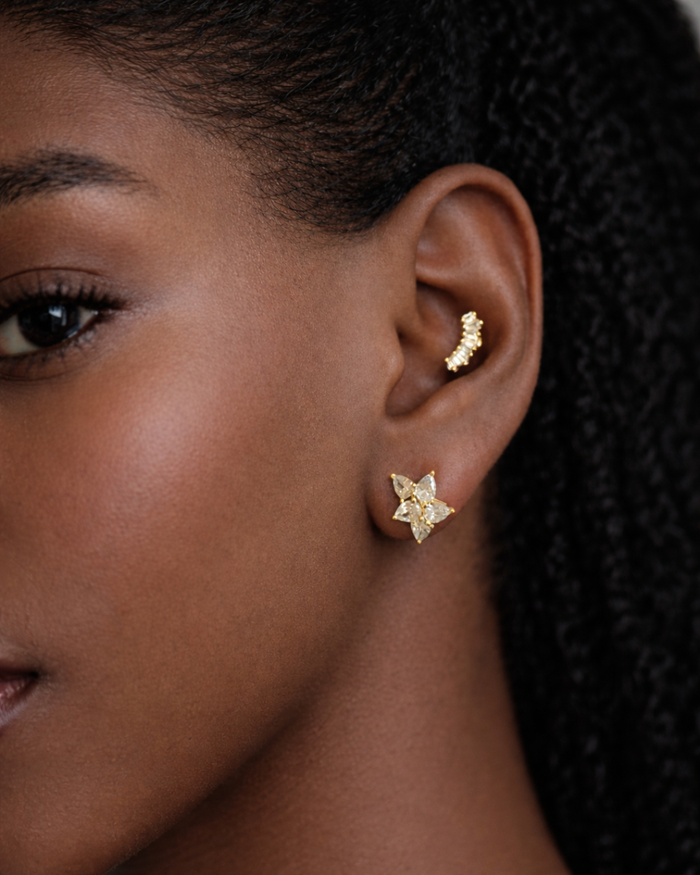
From delicate crystal studs to sculptural gold and silver designs, ball-back earrings make practical piercing jewellery feel beautifully considered.
Why are ball-back earrings popular for cartilage piercings? Their secure fastening and smooth back make them particularly suited to helix, flat, conch, tragus and multiple-lobe placements, where comfortable jewellery may need to remain in place for an extended healing period.
Removal & Troubleshooting
How to Remove a Stuck Screw-Back Safely
If your screw-back earring will not move, do not pull or force it. A little product residue, dried saline or a very secure fastening is often all that is keeping it in place. Follow these steps slowly and gently.
Clean Your Hands
Wash and dry your hands thoroughly. Gently clean around the earring with sterile saline to remove any residue that may be sitting around the fastening.
Improve Your Grip
Wear clean rubber gloves or use a clean piece of gauze for extra traction. This makes the small front and ball back easier to hold without scratching the jewellery.
Turn It to the Left
Hold the decorative front of the earring completely still. Slowly rotate the ball back counter-clockwise — towards the left — until the threaded fastening begins to loosen.
Add Gentle Warmth
Let warm water run over the area in the shower for a few minutes. This can help soften dried residue around the post before you try the fastening again.
Ask a Piercer
If the back still will not move, stop trying. A professional piercer has the correct tools and grip to release it without unnecessarily irritating the piercing or damaging the earring.
Important
Do not remove jewellery from a fresh, swollen, painful or bleeding piercing without speaking to a professional piercer first. Never force the fastening or continue twisting if the area becomes sore.
Know Your Earring Backs
Ball-Back vs Flat-Back vs Butterfly
The front of an earring may get all the attention, but the fastening determines how it feels, how securely it stays in place and which piercing placements it suits. Here is how the three most common earring backs compare.
| Earring Back | Comfort | Security | Best For |
|---|---|---|---|
| Ball-Back Screw fastening | Smooth and rounded behind the ear, without an exposed post pressing into the skin. | The threaded mechanism twists firmly into place and is designed to stay secure during everyday wear. | Helix, flat, conch, cartilage and multiple-lobe piercings. |
| Flat-Back Labret style | Sits flush against the back of the ear and can feel especially comfortable in close-fitting placements. | Secure when fitted correctly, although the small fastening can be more difficult to change without help. | Tragus, conch, helix and tightly curated ear stacks. |
| Butterfly Back Push fastening | The exposed post may poke behind the ear, particularly when sleeping or wearing headphones. | Quick and easy to use, but more likely to loosen or catch during everyday movement. | Fully healed lobe piercings and earrings that are removed regularly. |
Good to Know
Butterfly backs are practical for healed lobes, but their exposed posts and bulkier fastenings can create unnecessary pressure in cartilage placements. For a fresh piercing, always let your professional piercer recommend and approve the most suitable back, post length and earring size.
Build Your Ear Story
Ball-Back Studs and the Curated Ear
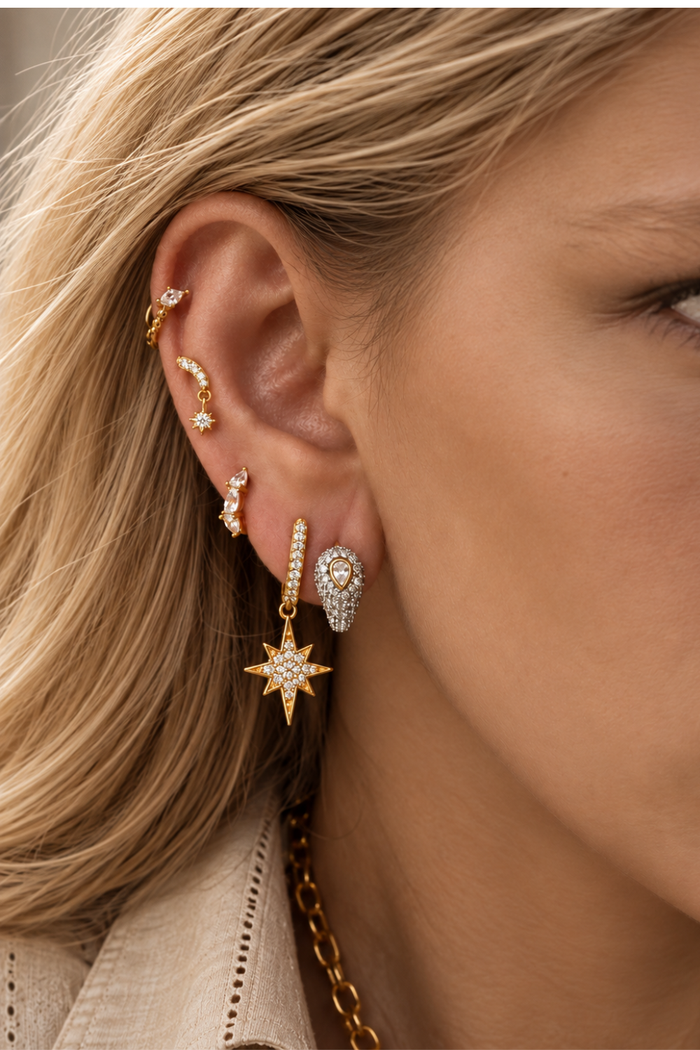
A curated ear combines different piercings, shapes and proportions to create a stack that feels personal rather than perfectly matched.
Ball-back studs make an ideal foundation. Their secure fastening and compact proportions allow them to sit neatly between hoops, huggies, ear climbers and cuffs without making the ear feel overcrowded.
Start With Placement
Use a sculptural stud in the helix, flat or conch as the focal point, then build the rest of your ear around it.
Mix the Proportions
Pair tiny ball-back studs with a larger hoop or ear climber to create contrast while keeping the overall stack balanced.
Add the Layers
Once every piercing has fully healed, add mini huggies, cuffs and mixed-metal details to make the combination entirely your own.
Planning a new ear stack? Begin with the piercings and jewellery that suit your anatomy, allow every fresh piercing to heal properly and add new layers gradually. The best ear stories are collected over time.


Your Questions, Answered
Ball-Back Earring FAQs
From bringing your own jewellery to a piercing appointment to sleeping, cleaning and healing, these are the questions customers ask us most about ball-screw earrings and cartilage piercings.
01 Are ball-back earrings good for cartilage piercings?
Ball-back earrings can be a comfortable option for cartilage placements because the rounded back feels smooth behind the ear and the threaded fastening helps the earring stay securely in place.
For a fresh helix, flat, conch or tragus piercing, your professional piercer should always confirm that the material, post length, gauge and overall design are suitable for your anatomy and expected swelling.
02 Can I bring my own earring to a piercing appointment?
Many professional piercers will consider customer-supplied jewellery, provided they can inspect it first, confirm that it is appropriate for the chosen placement and sterilise it using their professional equipment.
Selected Galleria Armadoro ball-screw earrings are already used by professional piercers in Athens for initial piercings. Contact your studio before booking, show them the earring and allow the piercer to make the final decision.
03 How do I remove a stuck screw-back earring?
Wash your hands, hold the decorative front completely still and gently rotate the ball back counter-clockwise. Clean rubber gloves or gauze can provide extra grip.
If dried residue is making the fastening difficult to move, allow warm water to run over the area for a few minutes. Stop if the piercing becomes painful, and visit a professional piercer if the back still will not loosen. Read our piercing aftercare guide.
04 What is the difference between ball-back, flat-back and butterfly earrings?
A ball-back twists onto a threaded post and creates a smooth, rounded finish. A flat-back sits flush behind the ear and is often used for close-fitting cartilage placements. A butterfly back pushes onto the post and is most commonly worn in healed lobe piercings.
The right choice depends on the piercing placement, your anatomy and whether the piercing is fresh or fully healed. Explore our complete ear piercing guide.
05 How long does a cartilage piercing take to heal?
Cartilage piercings commonly take several months to heal, with many helix, flat, conch and tragus piercings requiring approximately six to twelve months. Healing time varies according to placement, anatomy, aftercare and whether the piercing is repeatedly knocked or slept on.
A piercing may look healed on the outside before the internal tissue has finished healing, so follow your piercer’s advice before changing the jewellery.
06 Can I sleep with screw-back earrings on?
The smooth rounded back can make screw-back earrings comfortable for everyday and overnight wear once the piercing is fully healed.
During the healing period, avoid sleeping directly on the new piercing. Pressure and friction can cause soreness, swelling or piercing bumps, regardless of which earring back you are wearing.
07 What earring materials are suitable for sensitive ears?
Look for clearly described, hypoallergenic and nickel-compliant jewellery from a reputable brand. Galleria Armadoro ball-screw earrings are made using REACH-compliant materials, with selected designs crafted from 925 sterling silver and finished in gold or white rhodium.
For an initial piercing, your piercer should inspect the specific piece and confirm that its material, finish and construction are appropriate before sterilisation.
08 Do ball-back earrings loosen over time?
Like any threaded fastening, a ball back can gradually loosen through regular movement. Check it occasionally with clean hands and tighten it gently until it feels secure.
Finger-tight is enough. Over-tightening may make the earring difficult to remove or place unnecessary pressure on the post and threads.
09 How should I clean a ball-back earring?
For a fresh piercing, do not remove the earring simply to clean it. Follow your piercer’s aftercare instructions and use sterile saline around the piercing as directed.
Once the piercing is fully healed, remove the jewellery with clean hands, wash it gently using lukewarm water and mild soap, rinse thoroughly and dry it completely before reinserting it.
10 Where can I shop for ball-back cartilage earrings?
Explore the Galleria Armadoro Piercing Collection for hypoallergenic ball-screw studs designed for helix, flat, conch, cartilage and multiple-lobe piercings.
Choose your preferred design online, then show it to your professional piercer before the appointment if you would like it considered as initial piercing jewellery.
Comfort Through Healing
Why Ball-Back Earrings Work So Well for Cartilage Piercings
Cartilage placements such as the helix, flat, conch and tragus often need jewellery that can remain securely in place for several months.
When the correct post length, gauge and design are approved by a professional piercer, a ball-back stud offers a smooth, secure and lightweight option that can feel comfortable throughout everyday wear.
A Smooth Rounded Back
The polished ball creates a smooth finish behind the ear without the sharp exposed post associated with a traditional butterfly fastening.
A Secure Screw Fastening
The threaded mechanism helps the earring remain firmly in place during everyday movement, reducing the chance of it slipping off unexpectedly.
Lightweight Proportions
A carefully proportioned stud adds style without unnecessary weight, making it easier to build a balanced helix, conch or curated-ear look.
About Healing
Cartilage piercings usually heal more slowly than lobe piercings and may take approximately six to twelve months, depending on the placement, your anatomy and how the piercing is cared for.
During this period, avoid sleeping directly on the piercing and follow your piercer’s cleaning instructions. Any jewellery used for an initial piercing should first be inspected, approved and professionally sterilised by your piercer, with enough post length to allow for expected swelling.
The Healing Timeline
How Long Do Cartilage Piercings Take to Heal?
Healing time depends on the piercing placement, your anatomy, the jewellery used and how carefully the area is protected during recovery.
A piercing may appear healed on the outside before the tissue inside has fully recovered, so do not change the jewellery simply because the area looks calm.
Lobe Piercing
Approximately 6–8 weeksThe soft tissue of the lobe generally heals more quickly than cartilage, although aftercare is still essential during the early weeks.
Helix, Flat & Conch
Approximately 6–12 monthsThese cartilage placements need patience. Pressure, snagging and changing the jewellery too early can extend the healing period.
Tragus, Daith & Rook
Approximately 6–12 monthsThese more enclosed placements can be difficult to clean and may be affected by headphones, phones or pressure during sleep.
During Healing
Four Rules Worth Following
Follow your piercer’s instructions and use sterile saline around the piercing without unnecessarily removing or rotating the jewellery.
Avoid sleeping directly on the pierced ear. Pressure and friction can cause swelling, tenderness and irritation bumps.
Keep perfume, hairspray, skincare and make-up away from the piercing, and take care when brushing or styling your hair.
Wait until your piercer confirms that the piercing has healed sufficiently before replacing or removing the initial jewellery.
Good to Know
Healing timelines are estimates rather than deadlines. If you notice increasing pain, heat, significant swelling, unusual discharge or symptoms that concern you, contact your professional piercer or a medical professional rather than attempting to remove the jewellery yourself.
Tap the Ear to Discover Your Piercing
Explore each placement and discover healing time, pain level, and the perfect jewellery style for your next curated ear.
Explore before you choose
Flat Piercing
The flat piercing is chic, versatile, and perfect for jewellery that deserves a little more attention. It adds polish to a curated ear without feeling too obvious.
Shop Jewellery for Flat →

Designed in Athens
The Galleria Armadoro Difference
Piercing jewellery should feel considered from every angle. Our ball-screw earrings combine hypoallergenic materials, lightweight proportions and secure rounded backs with designs you will genuinely want to keep wearing.
Each style is created to bring together everyday comfort and the distinctive details that turn a single piercing into part of your ear story.
Hypoallergenic & REACH-Compliant
Our jewellery is made using carefully selected, nickel-compliant materials that meet EU REACH requirements and are suitable for sensitive ears.
925 Sterling Silver
Our ball-screw stud designs are crafted from 925 sterling silver for a lightweight feel, comfortable wear and a beautifully refined finish.
Gold & White Rhodium Finishes
Each design is finished in a thick layer of gold or white rhodium, bringing long-lasting polish and a choice of warm or cool-toned styling.
Designed & Finished in Athens
Every piece begins with a Galleria Armadoro design and is carefully hand-finished in Athens with close attention to proportion, comfort and detail.
For a New Piercing
Selected Galleria Armadoro ball-screw earrings are already used by professional piercers in Athens as initial piercing jewellery.
Choose the design you love and show it to your piercer before your appointment. They should inspect the material, post length, gauge and shape, then professionally sterilise the earring before deciding whether it is suitable for your chosen placement.
The result is a piercing that feels like yours from day one and an earring you can continue wearing long after healing.

Your Next Ear Story
Start With an Earring You’ll Want to Keep
Explore our collection of hypoallergenic ball-screw studs for helix, flat, conch, cartilage and multiple-lobe piercings.
Choose the design you love, show it to your professional piercer and ask them to inspect and sterilise it before your appointment. Because your first earring should feel like part of your ear story from day one — not something you are waiting to replace.
Jewellery intended for an initial piercing must always be assessed and approved by the professional piercer carrying out the procedure.
Shop the Piercing Collection

