


Helix Piercing Guide
The Ultimate Guide to Helix Piercings
A helix piercing is the cartilage piercing that sits along the upper outer rim of the ear — clean, modern, and quietly cool. In this guide, we cover pain level, healing time, aftercare, jewellery size, hoops, studs, bumps, infections, and how to style your helix beautifully.
New to ear piercings? Start with our complete Ear Piercing Guide .

Quick Facts
Helix Piercing, At A Glance
A helix piercing is one of the most popular cartilage piercings because it is clean, modern, and endlessly stackable. Here are the answers most people search for before booking one — pain, healing time, size, gauge, and when to change your jewellery.
01
What is a helix piercing?
A helix piercing sits along the upper outer cartilage rim of the ear. It is loved because it works beautifully with tiny studs, snug huggies, hoops, and full curated ear stacks.
02
Does a helix piercing hurt?
A helix piercing usually feels like a quick, sharp pinch. Because it goes through cartilage rather than soft lobe tissue, it can feel more intense than a lobe piercing, but the piercing moment is fast.
03
How long does it take to heal?
A helix piercing can look calmer after 3–6 months, but full cartilage healing may take 6–12 months. Do not rush jewellery changes just because the outside looks healed.
04
What size hoop is best?
For many healed standard helix piercings, a 6.5mm internal diameter huggie gives a snug, polished fit. The best size depends on ear shape, cartilage thickness, and placement.
05
What gauge is a helix piercing?
Most helix piercings are commonly worn with 18G jewellery, which is 1.0mm thick. Some studios may use 16G, so always check your size before changing your jewellery.
06
When can I change it?
Change your helix jewellery only when swelling, tenderness, heat, and discharge are fully gone. When in doubt, ask your piercer before switching from a stud to a hoop.


Placement Guide
What Is A Helix Piercing?
A helix piercing is any piercing placed through the upper outer cartilage rim of the ear. Unlike a lobe piercing, it goes through firmer cartilage, which is why it needs a little more patience, gentle aftercare, and properly fitted helix piercing jewellery.
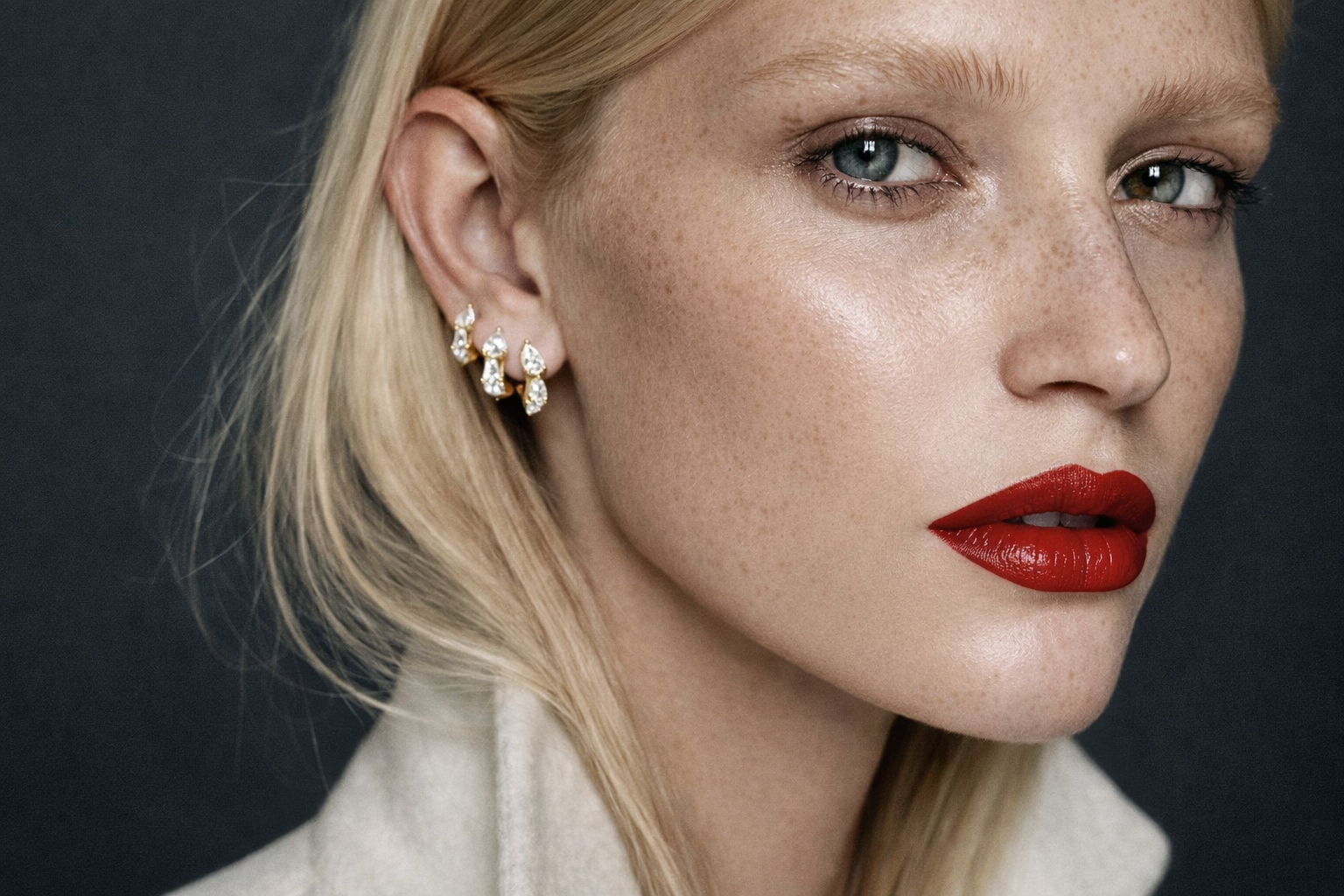
The reason everyone loves it? It instantly gives your ear stack shape. Wear it with a tiny helix stud, a snug helix huggie, or build it into a full Ear Stories moment with hoops, cuffs, and mixed metals.
Standard Helix
The classic upper outer rim placement. Perfect for healed huggies, hoops, and tiny studs.
Forward Helix
Sits closer to the face, above the tragus area. Usually styled with tiny secure studs.
Mid Helix
Placed slightly lower along the outer cartilage rim. Beautiful with small hoops or a clean stud.
Want the full ear map? Read our complete Ear Piercing Guide .
Where The Helix Sits
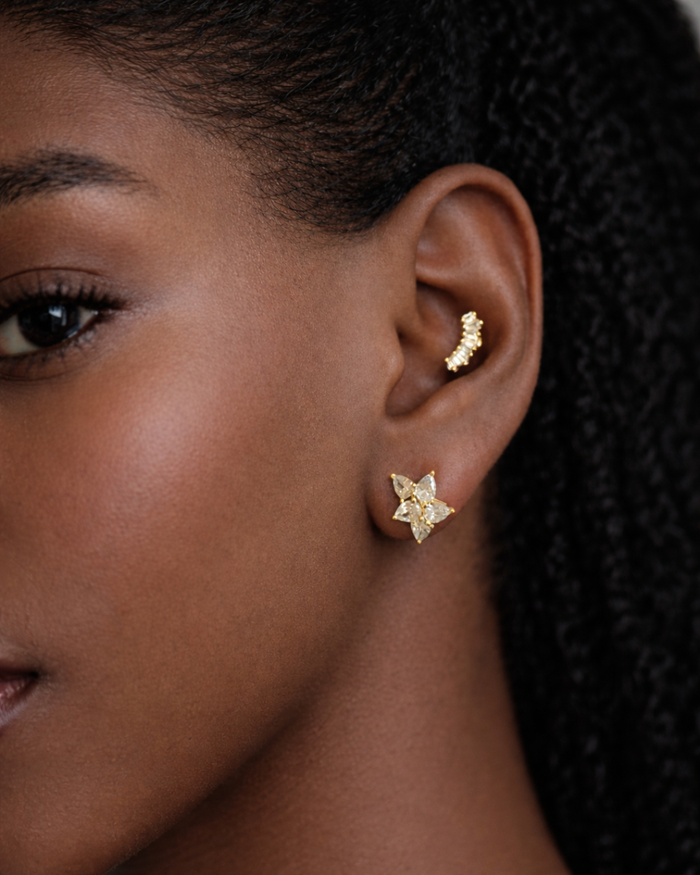
The helix piercing sits on the upper outer cartilage rim — the perfect placement for a polished cartilage stack.


Pain Level
Does A Helix Piercing Hurt?
Yes, a helix piercing can hurt a little — but it is usually quick, sharp, and over in seconds. Because the needle passes through cartilage rather than soft lobe tissue, the sensation can feel more intense than a standard lobe piercing.
Most people describe helix piercing pain as a fast pinch followed by warmth, pressure, or tenderness around the upper ear. The piercing moment itself is brief. The real commitment is the healing stage, where gentle aftercare and avoiding pressure make all the difference.
Choose a professional piercer, avoid piercing guns for cartilage, eat before your appointment, keep hair and headphones away from the area, and do not sleep on your new helix piercing.
For a smoother recovery, read our Piercing Aftercare Tips before booking your appointment.
Healing Timeline
Helix Piercing Healing Time: What To Expect
A helix piercing can look calmer after 3–6 months, but full cartilage healing may take 6–12 months. Cartilage heals more slowly than soft lobe tissue, especially if the area is touched, slept on, snagged by hair, or changed too early.
Days 1–7
Fresh, tender, a little dramatic
Tenderness, warmth, light swelling and slight redness can be normal. Keep your hands away, clean gently with sterile saline, and avoid sleeping on the pierced ear.
Weeks 2–4
The calm-down phase
Swelling may start to settle. Light crusting can happen, but do not pick it, twist the jewellery, or over-clean the area.
Weeks 6–8
Looks better, still healing
The piercing may look much better from the outside, but cartilage is still healing inside. This is when many people change jewellery too early.
Months 3–6
The settling stage
Your helix may feel more comfortable. If there is no swelling, pain, heat, or discharge, your piercer may confirm whether the jewellery can be adjusted.
Months 6–12
Ready for the good jewellery
This is the deeper cartilage settling stage. Once fully healed, you can start styling your helix with decorative huggies, hoops, studs, and curated ear stack pieces.
Quick rule: if your helix feels hot, swollen, sore, or suddenly angry again, pause jewellery changes and treat it like a new piercing.
Aftercare Checklist
Helix Piercing Aftercare: How To Help It Heal
A helix piercing does not need a complicated routine. It needs clean hands, gentle cleaning, no pressure, and a little patience. Cartilage heals slowly, so the goal is to keep the area calm while your piercing settles.
Wash Your Hands First
Before touching your helix piercing for any reason, wash your hands properly. Better yet, avoid touching it unless you are cleaning it.
Clean With Sterile Saline
Use sterile saline wound wash to gently clean the area. Avoid alcohol, hydrogen peroxide, harsh soaps, creams, oils, or random quick-fix products.
Do Not Twist The Jewellery
Twisting or rotating jewellery can irritate the piercing and delay healing. Let the jewellery sit still while the tissue heals around it.
Avoid Sleeping On It
Pressure is one of the biggest reasons helix piercings become irritated. Try not to sleep on the pierced ear, especially during the first months.
Watch Hair, Towels And Headphones
Hair, jumpers, towels, helmets and headphones can all catch or press on a healing helix. Be gentle when dressing, brushing your hair, or changing clothes.
Wait Before Changing Jewellery
Even if your helix looks healed, cartilage can still be healing inside. Change jewellery only when swelling, tenderness, heat and discharge are fully gone.
GA rule: if your helix feels hot, swollen, painful, or suddenly angry, pause jewellery changes and check whether it is irritation or something that needs professional advice.
Bump Or Infection?
Helix Piercing Bump Or Infection? What’s Normal And What Isn’t
A helix piercing bump is usually caused by irritation, not infection. Cartilage piercings can be a little dramatic while healing, especially if they are slept on, snagged by hair, pressed by headphones, or changed too early.
Irritation Bump
An irritation bump usually looks like a small raised bump near the piercing hole. It may come and go, flare after pressure, and improve when the area is left alone.
- Often triggered by sleeping on the piercing
- Can happen from headphones, helmets, towels or hair snagging
- May appear after changing jewellery too early
- Usually improves when friction and pressure are reduced
Possible Infection
A helix piercing may be infected if symptoms are spreading, worsening, hot, throbbing, or paired with thick yellow or green discharge.
- Redness or swelling is spreading beyond the piercing area
- Pain feels throbbing or is getting worse
- The area feels hot, very swollen or increasingly tender
- There is thick yellow or green discharge, fever, chills or feeling unwell
Keloid Or Scar Tissue
A keloid is different from a normal irritation bump. It is firm scar tissue that grows beyond the piercing site and does not come and go like irritation.
- Usually feels firm or raised
- Grows beyond the piercing hole
- Does not calm down like a pressure-related bump
- More likely if you have a history of keloid scarring
Quick rule: if your helix bump appears after pressure or snagging, it is often irritation. If symptoms are spreading, worsening, hot, painful, or making you feel unwell, get professional advice.
This guide is for general information only and does not replace medical advice. If your symptoms feel severe, unusual, or rapidly worsening, speak to a professional piercer or healthcare provider.
Quick Self-Check
Is Your Helix Piercing Irritated Or Infected?
Not every angry-looking helix piercing is infected. Most bumps and flare-ups come from irritation: sleeping on it, catching it with hair, tight headphones, over-cleaning, or changing jewellery too early. Answer these five questions for general guidance.
Helix Jewellery Guide
Best Jewellery For Helix Piercings
Once your helix piercing is fully healed, the fun begins. The best helix piercing jewellery should feel secure, lightweight, smooth, and comfortable enough for everyday wear — because a cartilage piercing should look good without constantly reminding you it exists.


01
Ball Screw-Back Studs
A helix stud is ideal if you want something secure, minimal, and easy to wear. Our ball screw-back studs twist securely into place, making them perfect for cartilage placements where comfort and stability matter.
02
6.5mm Huggies
For many healed standard helix piercings, a 6.5mm internal diameter huggie gives that snug, polished fit. It sits close to the cartilage and pairs beautifully with lobe hoops, studs, and ear cuffs.
03
Hinged Hoops And Clickers
A helix hoop or hinged clicker is perfect once the piercing is fully healed. Hoops move more than studs, so save them for a calm, settled helix with no swelling, tenderness, or irritation.
04
Ear Cuffs
Not ready for another piercing? An ear cuff gives the illusion of a stacked cartilage look without the healing process. It is also the easiest way to test where your next helix piercing might sit.
Styling note: for healed helix piercings, choose jewellery that feels smooth, lightweight, secure, and comfortable. The goal is a curated ear stack that looks intentional — never irritated.


Size Guide
```What Gauge And Hoop Size Is Best For A Helix Piercing?
The best helix piercing jewellery size depends on your ear anatomy, cartilage thickness, and the exact placement of your piercing. A helix that sits close to the edge of the ear may suit a smaller snug huggie, while a higher or thicker cartilage placement may need a slightly larger hoop.
GA Helix Fit Notes
18G
1.0mm Post
6.5
Snug Huggie
8.5
Relaxed Fit
11+
Statement
Common Helix Gauge
Our piercing studs and huggies are crafted in 18G, which is 1.0mm thick. This is one of the most commonly worn sizes for cartilage and helix piercings, but always check your existing jewellery size before changing it.
Snug Huggie Fit
For many healed standard helix piercings, a 6.5mm internal diameter huggie gives that close, polished, barely-there but perfectly styled fit.
Softer, More Relaxed Fit
An 8.5mm huggie can work well if your cartilage is thicker, your piercing sits a little higher, or you want space for a small charm.
Statement Or Lower Placement
Larger hoops can suit lower placements, statement styling, or looks where you want more visible space between the hoop and the cartilage.
Fit rule: your helix hoop should sit comfortably without squeezing, pulling, twisting, or pressing into the cartilage. Jewellery should look polished, but it should never feel tight.


Helix Piercing Ideas
Can You Get A Double Or Triple Helix Piercing?
Yes, you can get a double helix piercing or a triple helix piercing — but the best ear stacks are planned, not rushed. Multiple helix piercings can look beautifully balanced when the spacing follows your ear shape and the jewellery feels light, secure and comfortable.
A double helix piercing places two piercings along the upper cartilage rim. A triple helix piercing creates a stronger stacked cartilage look, especially when styled with graduating huggies, pavé studs, mixed metals or a tiny charm detail.
Before booking: ask your piercer about spacing, swelling and healing order. Then build the look slowly with secure studs, snug huggies and cartilage-friendly pieces.
The Minimal Double
Two tiny ball screw-back studs in matching gold or silver. Clean, polished and very everyday — perfect if you want your cartilage stack to feel subtle but styled.
The Snug Huggie Stack
Two healed helix piercings styled with small huggies. Simple, sculptural and very GA. Keep the fit comfortable, never tight.
The Mixed Metal Ear Story
One silver stud, one gold huggie and mixed-metal lobe earrings. Effortless, but not accidental — the kind of stack that looks collected over time.
The Graduated Stack
Start with a tiny stud, add a snug huggie, then finish with a slightly larger hoop or charm. A little structure, a little sparkle, a lot of ear story.
Triple Helix Styling Ideas
A triple helix is more of a statement, so keep the styling intentional. Think balance, spacing and one little moment of drama.
The Pavé Moment
Tiny crystal or pavé details that catch the light without taking over the whole ear.
The Charm Detail
One small charm on a healed hoop to give movement without adding too much weight.
The Full Ear Story
Helix piercings, lobe huggies, cuffs and small studs for a curated ear that feels personal.


Jewellery Changes
When Can You Change A Helix Piercing?
You should only change your helix piercing jewellery when the piercing is fully calm: no swelling, no tenderness, no heat, no discharge, and no irritation bumps. A helix can look healed on the outside before the cartilage has fully settled inside, so changing jewellery too early is one of the easiest ways to make it angry again.
Change Your Helix Jewellery When It Feels Fully Calm
For many people, a helix piercing may start to feel better after 3–6 months, but full cartilage healing can take 6–12 months. If you want to switch from a stud to a hoop, ask your piercer first.
- There is no swelling around the piercing.
- There is no pain or tenderness when touched gently.
- There is no heat around the cartilage.
- There is no discharge or unusual crusting.
- There is no irritation bump near the piercing hole.
- The jewellery feels comfortable without pulling or pressure.
- Your piercer confirms it is safe to change.
Do Not Rush From A Stud To A Hoop
Hoops move more than studs, which means they can irritate cartilage if your helix is not fully settled. If your piercing still feels sensitive, give it more time.
- Your helix still feels sore, tender or swollen.
- It flares up after sleeping on it.
- You see redness, heat, swelling or discharge.
- There is a bump near the piercing hole.
- Your jewellery feels tight, angled or uncomfortable.
- You are unsure what gauge or hoop size you need.
- You are changing it only because it looks healed outside.
Safe styling rule: the first jewellery changes should be simple, smooth and lightweight — a secure helix stud, a properly fitted huggie, or a comfortable cartilage hoop that does not squeeze the ear.
Material Guide
Best Materials For Helix Jewellery
For a helix piercing, material matters. Cartilage can be more sensitive than the lobe, especially if the jewellery is heavy, rough, badly fitted, or made from materials that irritate the skin. The best helix jewellery should feel smooth, lightweight, secure and skin-friendly.
01
925 Sterling Silver
925 sterling silver is a beautiful choice for healed helix piercings because it is lightweight, polished and easy to style. It works especially well for clean silver ear stacks or modern mixed-metal looks.
02
18ct Gold Plating
Gold helix jewellery gives cartilage piercings a warm, polished finish. Our gold pieces are designed with 18ct gold plating, making them ideal for everyday styling once the piercing is healed and calm.
03
White Rhodium Plating
White rhodium plating gives silver-tone jewellery a bright, refined finish. It is especially beautiful for pavé studs, crystal details and minimal huggies because it keeps the look crisp and luminous.
04
Hypoallergenic Jewellery
At Galleria Armadoro, our helix and piercing jewellery is designed to be hypoallergenic, REACH certified, nickel-safe, lead-safe and cadmium-safe, so you can build your ear story with more confidence.
Skin-friendly, stack-friendly, everyday friendly.
Once your helix is fully healed, choose jewellery that is comfortable enough for everyday wear and polished enough to become part of your signature ear stack. If it pulls, catches, squeezes or irritates the cartilage, it is not the one.
Material rule: for a healed helix piercing, choose jewellery that is smooth, lightweight and comfortable. A cartilage stack should look intentional — never irritated.
Styling Guide
How To Style A Helix Piercing
The beauty of a helix piercing is that it gives the ear shape. It sits high on the cartilage, balances your lobe earrings, and turns a few simple pieces into a curated ear stack.


01
The Everyday Helix
Start with one small helix huggie or a secure ball screw-back stud. Add simple huggies in the first and second lobe, then keep the rest clean.
Best For Everyday02
The Sparkle Helix
Choose a tiny pavé stud, crystal detail or delicate huggie to catch the light at the top of the ear. Pair it with plain hoops so the helix becomes the little sparkle moment.
Best For Subtle Shine03
The Mixed Metal Ear Story
Mix gold and silver pieces across the ear: a gold helix huggie, a silver stud, and two-tone hoops or layered lobe earrings. Modern, effortless, and less predictable.
Best For Mixed Metals04
The Full Ear Story
Combine a helix piercing with lobe huggies, tiny studs, cuffs and one small charm. Choose one hero piece, then keep the rest smooth, lightweight and comfortable.
Best For A Curated StackChoose one little moment of drama.
A beautiful helix piercing stack is all about balance. Let one piece lead — a snug huggie, a pavé stud, a charm or a mixed-metal detail — then style the rest of the ear around it.
Piercing Price Guide
How Much Does A Helix Piercing Cost?
The cost of a helix piercing depends on where you go, the experience of the piercer, the studio standards, and the jewellery you choose. A simple cartilage piercing may cost less than a helix piercing with premium jewellery, multiple placements, or a full ear stack plan.
General Europe Guide
€25–€60
A helix piercing can often cost around €25–€60 in Europe, with jewellery sometimes charged separately. Prices vary from studio to studio, so always check what is included before booking.
01
The Piercing Studio
A professional studio with experienced piercers, sterile equipment and proper placement advice may cost more — and for cartilage, that is usually worth it. A good helix piercing starts with safe placement.
02
The Jewellery
Basic starter jewellery may be included in some studios, while premium materials, gold pieces, titanium, decorative studs or upgraded hoops can cost extra. Always ask what jewellery is included.
03
The Placement And Follow-Up
A standard helix piercing is usually simpler than a double helix, triple helix or forward helix. Some studios include check-ups or jewellery downsizing appointments, while others charge separately.
GA rule: do not choose a helix piercing only because it is the cheapest. With cartilage piercings, placement, hygiene, jewellery quality and clear aftercare advice matter more than saving a few euros.
Helix Piercing FAQs
Everything Else You Wanted To Ask
The quick answers on helix piercing healing, pain, jewellery size, bumps, hoops, studs and styling — all in one place.
What is a helix piercing?
A helix piercing is a cartilage piercing placed on the upper outer rim of the ear. It is one of the most popular cartilage piercings because it is easy to style with tiny studs, snug huggies, hoops and curated ear stacks.
How long does a helix piercing take to heal?
A helix piercing can look calmer after 3–6 months, but full cartilage healing may take 6–12 months. Cartilage heals more slowly than the lobe, so avoid changing jewellery too early.
Does a helix piercing hurt?
A helix piercing usually feels like a quick, sharp pinch. Because it goes through cartilage rather than soft lobe tissue, it can feel more intense than a lobe piercing, but the piercing moment itself is fast.
What size hoop is best for a helix piercing?
For many healed standard helix piercings, a 6.5mm internal diameter huggie gives a snug, polished fit. The best size depends on your ear shape, cartilage thickness and exact piercing placement.
What gauge is a helix piercing?
Most helix piercings are commonly worn with 18G jewellery, which is 1.0mm thick. Some studios may use 16G, so always check your existing gauge before changing jewellery.
When can I change my helix piercing jewellery?
Change your helix piercing jewellery only when the piercing is fully calm: no swelling, pain, tenderness, heat, discharge or irritation bump. If you are unsure, ask your piercer before switching jewellery.
Can I sleep on a new helix piercing?
No, it is best not to sleep on a new helix piercing. Pressure can cause swelling, irritation bumps and delayed healing. Try sleeping on the opposite side or using a piercing pillow while it heals.
Why do I have a bump on my helix piercing?
A helix piercing bump is usually caused by irritation from pressure, snagging, headphones, sleeping on the piercing, over-cleaning or changing jewellery too early. If redness spreads, pain worsens, or discharge becomes thick or coloured, seek professional advice.
Is my helix piercing infected or irritated?
Most helix flare-ups are irritation, but possible infection signs include spreading redness, increasing heat, throbbing pain, thick yellow or green discharge, fever or feeling unwell. Read our Irritated vs Infected Piercing guide if you are unsure.
Can I put a hoop in my helix piercing?
You can wear a helix hoop once the piercing is fully healed and settled. Hoops move more than studs, so they are not usually the best choice for a fresh or irritated helix piercing.
Can I get a double helix piercing?
Yes, a double helix piercing places two piercings along the upper cartilage rim. It looks beautiful with matching studs, two snug huggies or one stud paired with one mini hoop.
Can I get a triple helix piercing?
Yes, a triple helix piercing creates a more dramatic stacked cartilage look. It should be planned carefully with a professional piercer so the spacing suits your ear shape and has room to heal.
What jewellery is best for a helix piercing?
The best helix jewellery is smooth, lightweight, secure and comfortable. Once healed, you can style your helix with ball screw-back studs, snug huggies, hinged hoops, clickers and ear cuffs.
Is 925 sterling silver good for helix piercings?
925 sterling silver is a beautiful choice for healed helix piercings. For a fresh piercing, always follow your piercer’s starter jewellery advice. Once healed, choose smooth, hypoallergenic, skin-friendly pieces that do not pull or irritate the cartilage.
Where can I shop helix piercing jewellery?
You can shop helix-friendly studs, huggies and cartilage earrings in our Piercing Collection, or build a full curated ear stack with our Ear Stories Collection.
From The Founder
From Dimitra Chouliara, Founder & CCO
Why we made helix jewellery this way
“We created our 6.5mm huggies after hearing from countless piercing clients who wanted a snug-but-safe fit for their helix piercings. They’re lightweight, secure, and designed to sit just right — whether it’s your first cartilage piercing or your third stack.”
“As our community grew, so did the requests — not just for mini huggies, but for studs that wouldn’t fall off mid-day. That’s why we introduced ball screw-back studs: they’re easy to twist on and off, ultra-secure, and a perfect match for our 925 sterling silver designs.”
Dimitra Chouliara Founder & CCO, Galleria Armadoro
More To Explore
Your Helix Piercing Is Only The Beginning
Build the rest of your ear story with guides, styling ideas and jewellery designed for everyday stacking — from healing advice to the pieces you will actually want to wear.
Shop Piercing Jewellery
Discover 18G studs, huggies and cartilage-friendly pieces made for healed helix piercings, curated stacks and everyday wear.
Explore Ear Stories
Build your personalised ear stack with huggies, studs, cuffs, hoops and charm details designed to mix, match and layer.
Read The Ear Piercing Guide
New to piercings? Start with our complete ear map, including helix, forward helix, tragus, conch, daith, rook and lobe placements.
Piercing Aftercare Tips
Learn how to care for a new piercing with gentle cleaning, pressure-free healing and smart aftercare habits.
Irritated Vs Infected Piercing
Not sure whether your helix is irritated or infected? Read the full guide before changing jewellery or trying quick fixes.
Building The Perfect Ear Story
Get inspired with styling ideas for lobe piercings, cartilage piercings, huggies, cuffs, mixed metals and curated ear stacks.
Waterproof Jewellery Guide
Discover why skin-friendly, hypoallergenic and everyday-ready jewellery matters when building a stack you rarely take off.
Now build the ear story.
Start with one healed helix, add the right huggie or stud, then layer the rest around it. Quietly cool, completely personal, very GA.